7 Essential Steps to Care for Lithops
Caring for Lithops, often called "living stones," starts with understanding their unique needs. You'll want to guarantee they get at least 6 hours of direct sunlight daily to thrive. But that's just the beginning. Proper watering is vital, as these fascinating plants are prone to root rot if overwatered. The key is to let the soil dry out completely between waterings. There's more to reflect on, like selecting the right soil and monitoring environmental factors. If you're looking to create the perfect home for your Lithops, let's explore the essential steps to keep them healthy and vibrant.
Understand Lithops Sunlight Needs
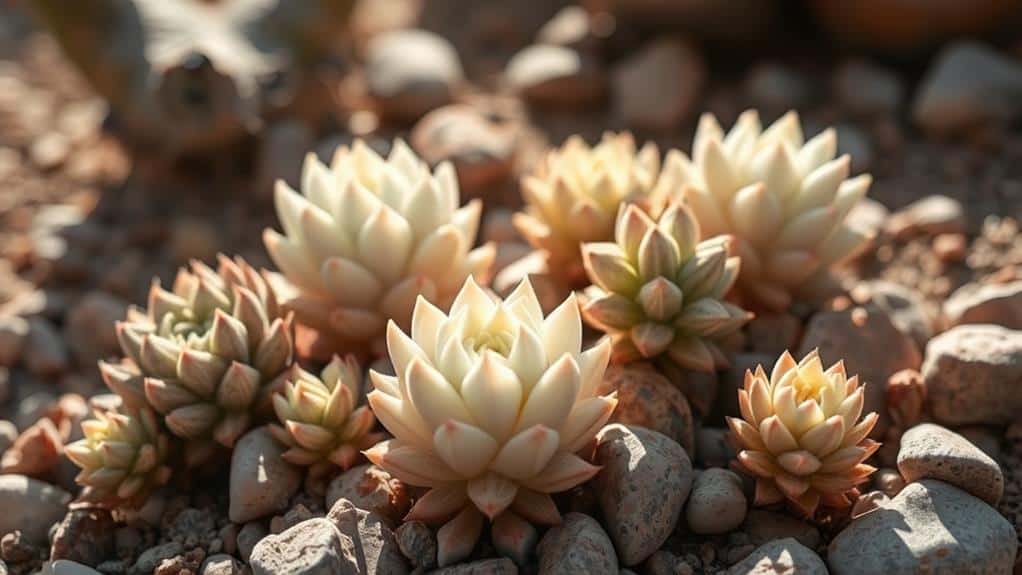
When caring for Lithops, it's essential to understand their sunlight needs to guarantee they thrive. These unique plants need a minimum of 6 hours of direct sunlight daily. Ideally, place them near south-facing windows where they can soak up the sun. Adequate light helps maintain their distinctive patterns and prevents etiolation, which is when the leaves elongate and lose their beautiful designs.
However, you should monitor for signs of leaf burn. Discoloration on the leaves indicates too much sunlight. If you notice this, consider adjusting their light exposure, especially during intense heat. Sometimes, protecting them from the harsh afternoon sun can prevent sunburn on their leaves.
Their natural camouflage-like appearance in rocky environments helps them reduce water loss and survive in arid conditions. This adaptation shows just how significant proper light exposure is for their healthy growth.
Master the Watering Routine
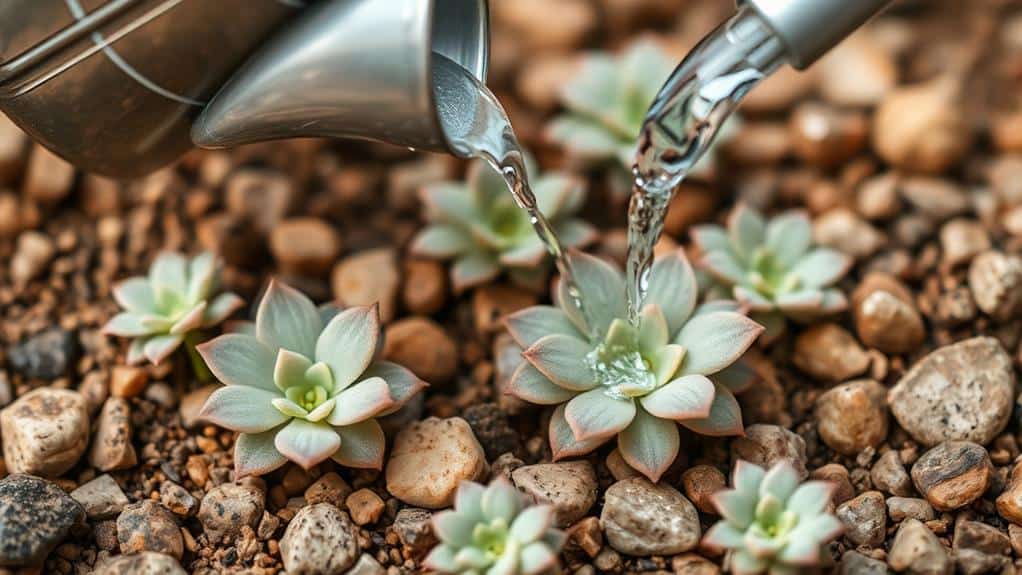
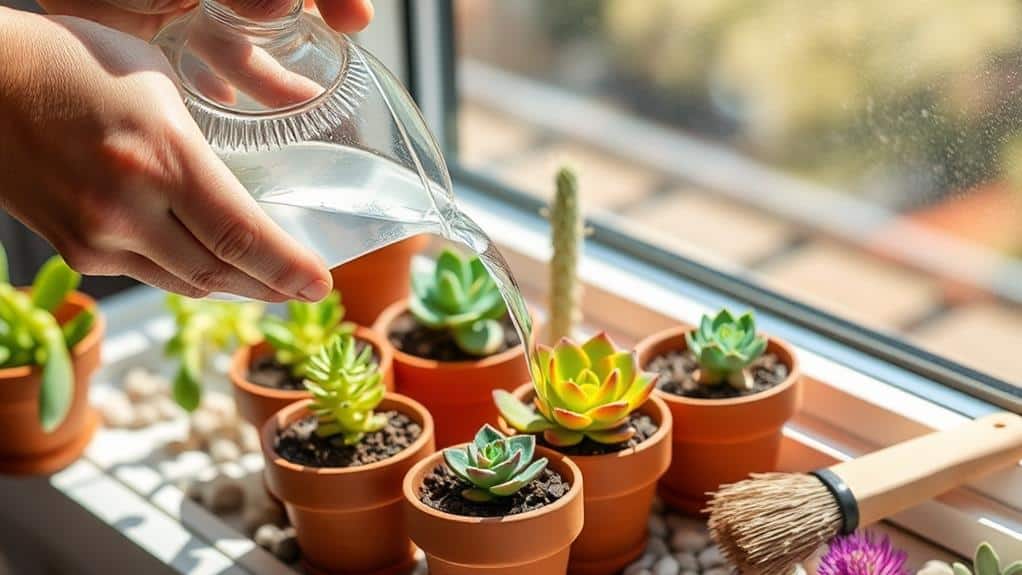
To master the watering routine for your Lithops, start by monitoring the soil moisture and only water when it's completely dry.
Adjust your watering frequency to every 2-3 weeks during their active growth periods in spring and fall.
Be sure to avoid watering during their dormancy in summer and winter to keep them healthy.
Monitor Soil Moisture
Mastering the watering routine is essential for the health of your Lithops. To keep these fascinating plants thriving, you need to monitor soil moisture carefully. Lithops should only be watered when the soil is completely dry. Overwatering is the leading cause of their demise, often resulting in root rot.
One key sign that your Lithops need water is when their leaves start to wrinkle or soften. This indicates they're thirsty and require immediate attention. A moisture meter can be very helpful to gauge soil dryness accurately. By using this tool, you verify that you water only when necessary, maintaining peak health for your Lithops.
During the dormant periods of summer and winter, water your Lithops sparingly. In fact, hold off on giving them any water until the old leaves are fully shriveled and new growth is ready to emerge. This helps the plant focus its energy on new growth.
When you do water, it's best to do so in the morning. This promotes evaporation and prevents excess moisture from lingering in the soil, reducing the risk of root rot. By following these steps, you'll keep your Lithops happy and healthy.
Adjust Water Frequency
Adjusting your watering frequency is essential for the well-being of Lithops, guaranteeing they receive just the right amount of moisture without risking root rot. To avoid overwatering, only water Lithops when the soil is completely dry. Typically, this means every 2-3 weeks during their active growth phases in spring and fall.
During their dormant periods in summer and winter, refrain from watering altogether.
Keep an eye out for signs of thirst, such as wrinkling or softening of the leaves, which indicate that it's time to water. Always water in the morning to allow for adequate evaporation. This prevents the roots from sitting in moisture, which can lead to root rot.
Using a moisture meter can be very helpful to accurately gauge when the soil is dry.
Be sure to adjust water frequency based on environmental factors like humidity and temperature. Higher humidity can mean watering less often, as Lithops are susceptible to rot in overly humid conditions.
Avoid Dormancy Watering
Understanding the importance of avoiding dormancy watering is essential for the health and longevity of your Lithops. During their dormant period in summer and winter, Lithops needs change considerably. They shouldn't be watered at all to prevent root rot and other health issues. Overwatering during these times can lead to mushy leaves and disastrous root problems.
To guarantee your Lithops thrive, monitor the soil moisture closely. Only water when the soil is completely dry, typically every 2-3 weeks during their active growth periods. However, during dormancy, hold off on watering entirely. A good indicator that your Lithops are ready for water is when the old leaves are fully shriveled. This means the plant is prepared for new growth.
Be attentive to signs of dehydration, such as wrinkled leaves, but remember that overwatering is a bigger threat. Ideal watering occurs in the morning, allowing moisture to evaporate and preventing waterlogging in the soil.
Choose the Right Soil
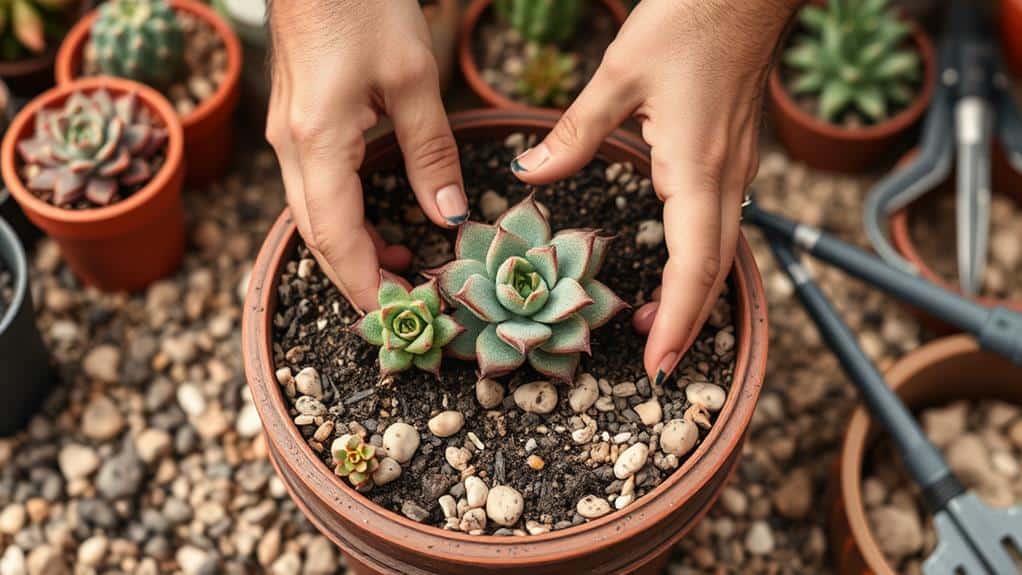
When it comes to choosing the right soil for your Lithops, you'll want to opt for a well-draining mix specifically formulated for cacti or succulents. This type of soil helps prevent waterlogging and root rot, which can be deadly for your plant.
A good mix should contain a high proportion of gritty materials like sand, perlite, or pumice. These materials allow excess water to drain quickly, keeping the roots dry and healthy.
To enhance drainage even further, you can add extra sand or small pebbles to your potting mix. This not only promotes healthier root systems but also mimics the natural environment Lithops thrive in.
It's essential to use pots with drainage holes. These holes facilitate proper water flow and prevent soggy soil conditions that can harm the plant.
Regularly check the soil's moisture level. Lithops prefer a dry environment, especially between watering sessions. Overwatering is a common mistake, so make sure the soil is dry before adding more water.
Monitor Temperature and Humidity
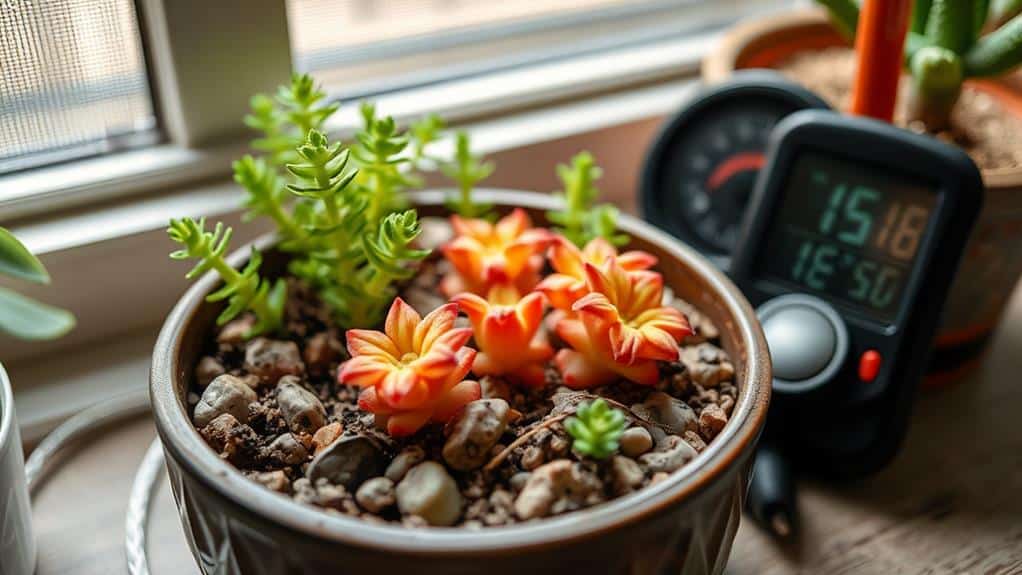
To keep your Lithops happy, pay attention to temperature and humidity levels.
They thrive in temperatures between 65°F and 80°F and don't like freezing conditions below 40°F.
These succulents prefer low humidity, so your average household environment should be just right without any extra misting needed.
Ideal Temperature Range
Keeping your Lithops healthy hinges on maintaining the right temperature and humidity levels. These slow-growing plants thrive best in an ideal temperature range between 50°F and 80°F. This makes them perfect for average indoor conditions.
However, they can handle temperatures up to 100°F if needed. Just be sure to protect them from freezing temperatures below 40°F, as this can be fatal.
Maintaining a consistent temperature range is essential for your Lithops' well-being. Extreme fluctuations can stress the plant and hinder its growth. To provide appropriate care, place your Lithops in a location with stable temperatures.
Avoid spots with drafts or direct exposure to cold air, like near open windows or air conditioning vents.
Lithops also prefer low humidity levels. While we'll discuss humidity tolerance in the next section, it's significant to mention that excessive humidity can lead to rot and other health issues.
Keep an eye on the room's environment to guarantee it stays within the preferred range. By monitoring these conditions, you're setting your Lithops up for a happy and healthy life.
Humidity Tolerance Levels
Understanding the humidity tolerance levels for Lithops is key to their health. These fascinating plants thrive in average household humidity levels, typically between 30% to 50%. This makes them a great fit for most indoor environments.
You don't need to mist Lithops; in fact, doing so can harm them. Increased humidity can lead to rot and other health issues, so it's best to keep the air around them dry.
Ideal temperatures for Lithops range from 50°F to 80°F, with 65°F to 80°F being the sweet spot during their growing season. It's essential to monitor both humidity and temperature closely, especially in the winter months.
Indoor heating can dry out the air, which might seem like a good thing, but it can also make the environment too harsh for Lithops if not balanced properly.
Maintaining good airflow around your Lithops is also vital. Stagnant air, combined with high humidity, can promote fungal diseases.
Make sure your Lithops get plenty of fresh air. By keeping an eye on both humidity and temperatures, you can provide the best care for your Lithops, ensuring they stay healthy and vibrant.
Seasonal Variations Impact
As the seasons change, keeping an eye on temperature and humidity becomes essential for your Lithops' well-being. These slow-growing plants thrive best in temperatures between 65°F to 80°F (18°C to 27°C). It's vital to protect them from freezing temperatures, as they can harm their health. During the dormant summer months, you'll need to reduce watering frequency. Lithops require minimal moisture and high humidity can lead to root rot, so be cautious.
Lithops prefer dry conditions similar to their native arid environments. Low humidity helps prevent fungal infections and keeps your plants healthy. Sudden temperature fluctuations can stress Lithops, so maintaining a stable environment is key. Whether indoors or in a controlled outdoor space, monitor both temperature and humidity regularly.
Here's a quick reference to help you:
| Season | Temperature Range (°F) | Humidity Level |
|---|---|---|
| Spring | 65°F – 75°F | Low |
| Summer | 70°F – 80°F | Very Low, reduce water |
| Fall | 65°F – 75°F | Low |
| Winter | 55°F – 65°F (no frost) | Low, minimal watering |
| Year-Round | 65°F – 80°F | Low |
Fertilize Sparingly
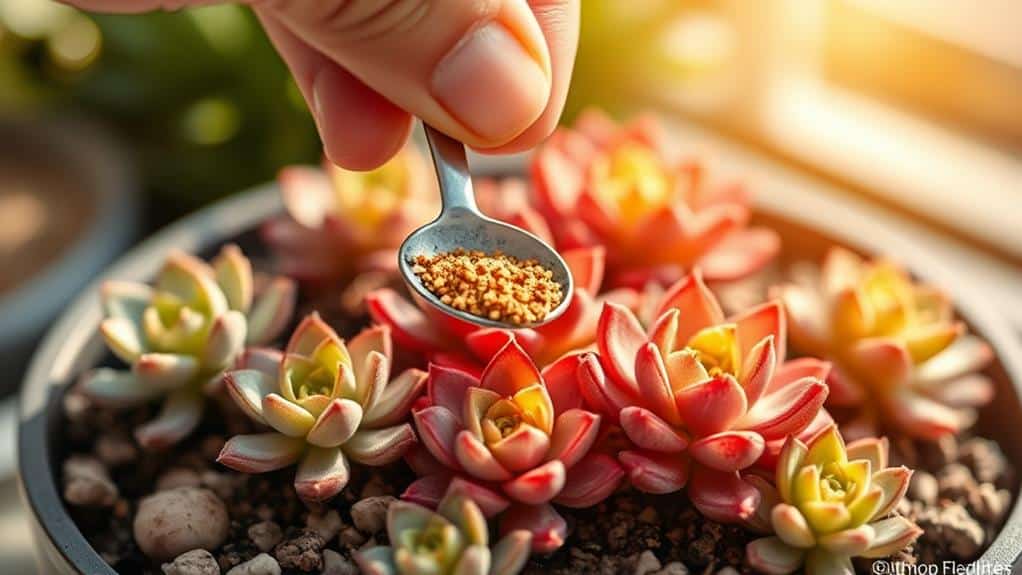
When it comes to fertilizing Lithops, less is more. You should fertilize sparingly, using a diluted cactus fertilizer low in nitrogen and high in potassium. This promotes blooming and keeps your Lithops healthy.
Apply fertilizer only during the active growing season in spring. Once a year is ideal, as too much can lead to weak growth or leaf discoloration.
Always monitor your Lithops after fertilizing to see how it responds. If you notice any issues, it's best to adjust your approach.
Remember, during dormant periods in summer and winter, Lithops don't need fertilizer. They require minimal nutrients when they're not actively growing.
A well-draining soil mix is essential for Lithops. This, combined with careful fertilization, supports their health and well-being.
Well-draining soil prevents root rot and other issues that can arise from overwatering or too much fertilizer.
Identify Common Issues
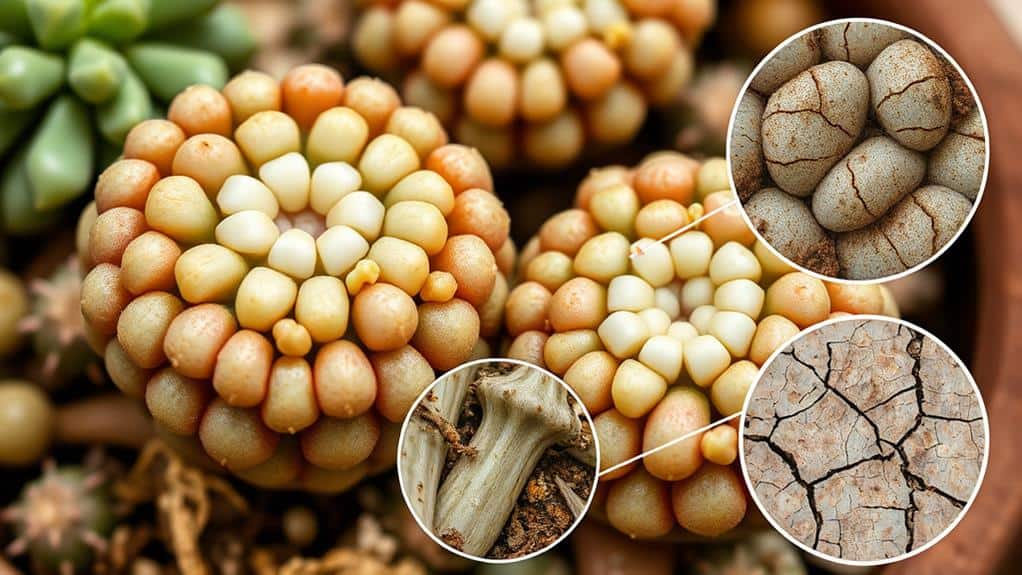
While careful fertilization supports healthy Lithops, it's equally important to recognize and address common issues that may arise. Overwatering is the leading cause of problems. If you notice yellow, mushy leaves, or root rot, your soil is likely too wet. Always verify the soil is completely dry before watering again.
Another issue to watch for is etiolation. This happens when your Lithops don't get enough light, causing the leaf pairs to stretch and elongate. If you see this, increase their exposure to sunlight to help them return to their normal shape.
Brown spots on the leaves can indicate edema, often caused by overwatering or fluctuating moisture levels. If you spot these, adjust your watering schedule immediately to prevent further damage.
Pests like mealybugs and aphids can also be a concern. Regularly inspect your Lithops for these tiny invaders, especially if you've been overwatering. Pests can cause serious health issues, so catching them early is vital.
Lastly, remember that some leaf splitting is natural and indicates new growth. However, excessive splitting might signal overwatering. Keep an eye on your moisture levels to maintain healthy Lithops.
Ensure Safe Environment
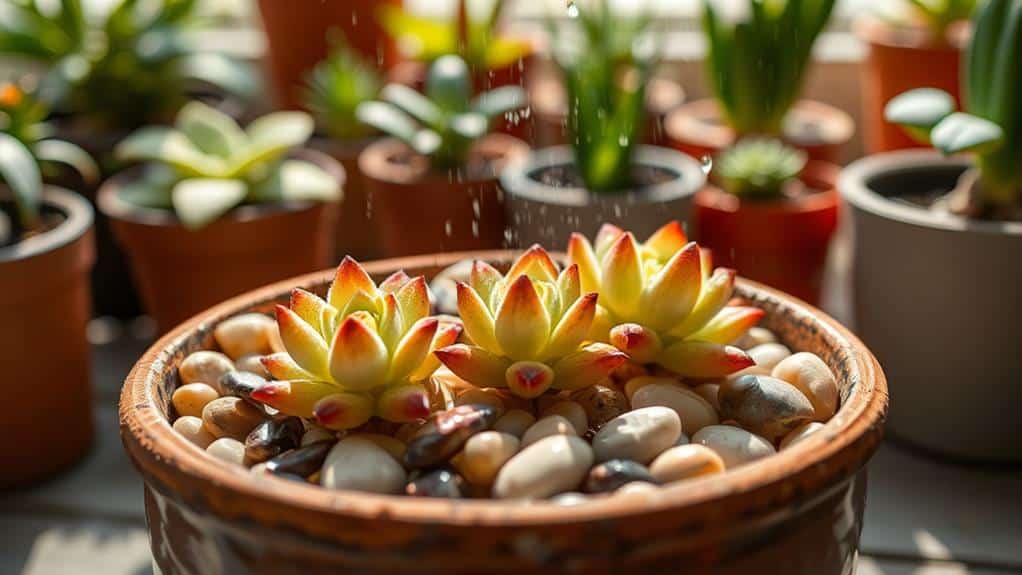
Creating a safe environment for your Lithops is fundamental for their survival and growth. These unique plants need at least 6 hours of direct sunlight each day. South-facing windows are ideal, as they help prevent etiolation, where the plants stretch out and become weak.
Make certain your potting container has drainage holes to avoid water accumulation, which can lead to root rot—a common issue with these succulents.
Maintaining the right temperatures is also essential. Keep indoor temperatures between 50-80°F. Lithops are sensitive to the cold and can suffer if temperatures drop below 40°F. It's best to keep them away from drafty windows or cold areas during winter.
Humidity plays an important role too. Lithops prefer low humidity environments and don't need misting. Average household conditions are usually perfect for them. Keep an eye on your indoor humidity levels to guarantee they're not too high.
Lastly, regularly inspect your Lithops for signs of pests or diseases. Early intervention can prevent infestations and health issues.
Frequently Asked Questions
How Do You Take Care of Lithops for Beginners?
You should place Lithops in a sunny spot, water them only when soil is dry, and use well-draining soil. Don't water during winter dormancy. Fertilize lightly in spring and watch for signs of stress.
How Often Do I Water My Lithops?
You should water your Lithops sparingly, every 2-3 weeks during their active growth periods in spring and fall. When they're dormant in winter and summer, don't water them at all, as they don't need moisture then.
How Do You Care for a Living Stone Plant Indoors?
Place Lithops in a south-facing window for 6 hours of sunlight daily. Water only when the soil's dry, use well-draining soil, and maintain temperatures between 50-80°F. Fertilize yearly in spring with diluted fertilizer.
Do You Water Lithops When They Are Splitting?
No, you shouldn't water Lithops when they're splitting. This phase is essential for their growth. Overwatering can lead to root rot. Wait until the old leaves are fully shriveled before resuming any watering.
Conclusion
Caring for Lithops might seem tricky at first, but you've got this! Remember to give them plenty of sunlight, water only when the soil is dry, and use well-draining soil. Keep an eye on the temperature and humidity, and don't overdo it with fertilizer. Watch out for common issues like pests and overwatering. By following these steps, you'll help your Lithops thrive. You've got all the tools you need to succeed, so go ahead and enjoy your gardening journey!