Best Pot Type For An Indoor Fig Tree
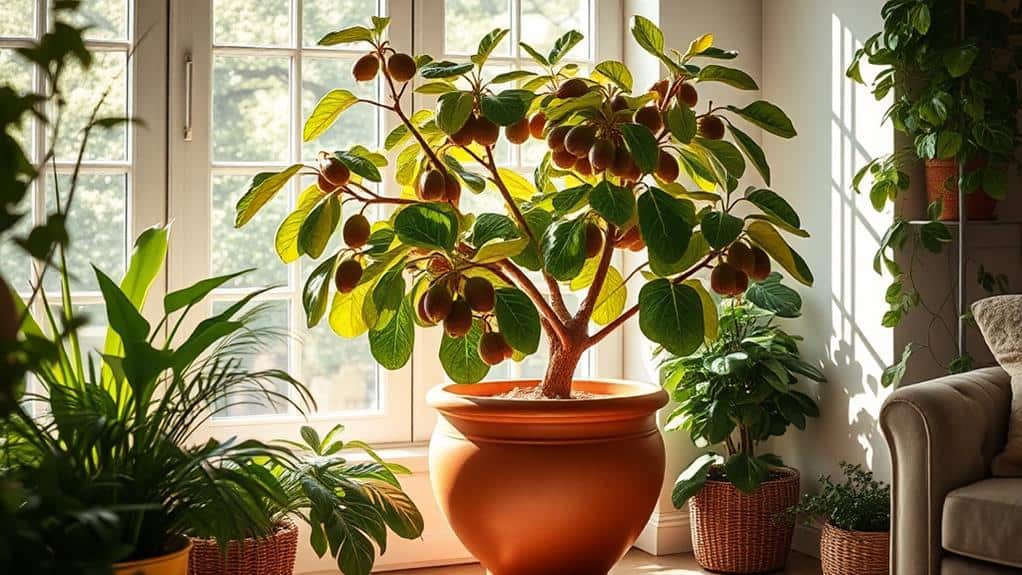
When it comes to choosing the best pot for an indoor fig tree, the options can be overwhelming. I've found that terracotta and fabric pots are excellent choices due to their ability to promote aeration and prevent root rot. Terracotta's porous nature allows for better moisture control, while fabric pots enhance root health through air pruning. However, plastic pots, though lightweight and affordable, require careful attention to drainage. Each pot type offers unique benefits that can greatly impact your fig tree's growth and health. So, how do you decide which one is right for your home?
Benefits of Different Pot Types
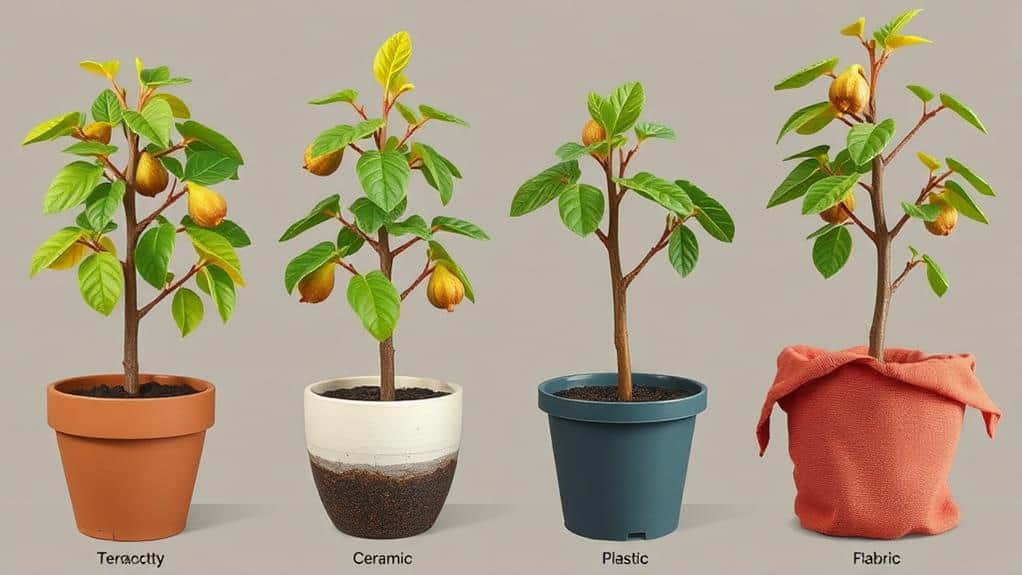
When choosing the best pot for an indoor fig tree, it's essential to evaluate the unique benefits of different pot types.
Plastic pots are lightweight and cost-effective, making them an easy choice. They retain moisture well, which is great for fig trees using potting soil, but they can cause root rot if there's no drainage hole. Always check for that!
On the flip side, fabric pots offer excellent breathability and prevent roots from circling, promoting healthier growth. They also help manage moisture levels better.
Wooden pots look beautiful and are eco-friendly, but they can be heavy and might need treatment to avoid rotting.
Each pot type has its perks, so consider your priorities carefully.
Choosing Terracotta Pots
Terracotta pots are a fantastic option for indoor fig trees, offering several advantages that promote healthy growth.
Made from natural clay, these pots provide excellent air circulation to the roots. This feature helps prevent root rot, a common issue with fig trees, by allowing the soil to breathe.
The porous nature of terracotta also wicks away moisture, reducing the risk of overwatering. This means your fig tree's roots stay dry and healthy.
Additionally, terracotta pots retain heat well, providing a stable temperature for the roots. This stability supports the overall health of your fig tree.
Terracotta pots come in various sizes, so you can find the perfect fit for your tree, preventing circling roots and promoting robust growth.
Ceramic Pots for Aesthetics
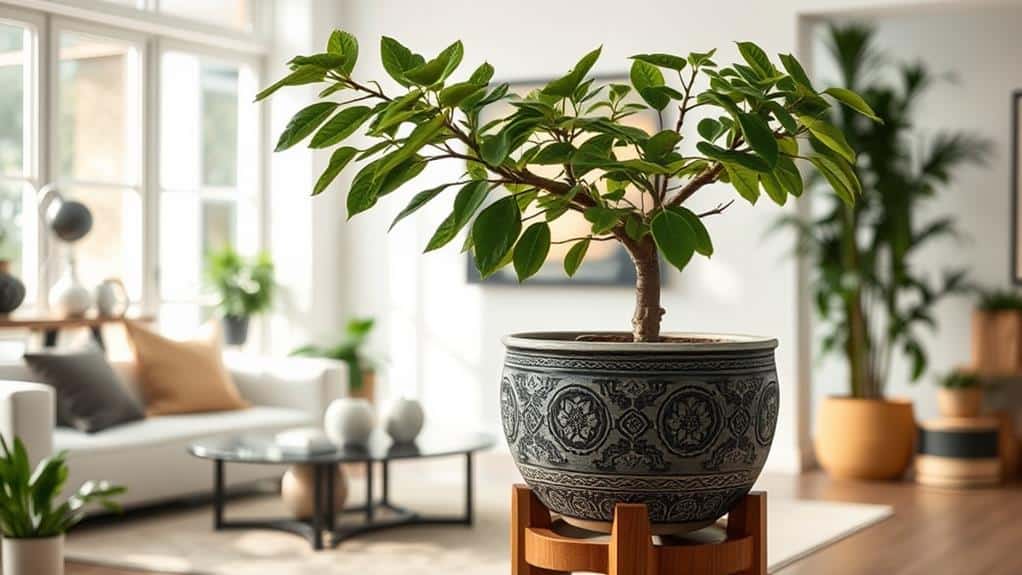
Ceramic pots are an excellent choice if you're looking to combine functionality with aesthetics for your indoor fig tree. They come in a wide array of colors, patterns, and finishes that can transform your space beautifully.
One of the best things about ceramic pots is their weight, which provides great stability. This is especially important for taller fig trees, as it helps prevent them from tipping over.
Make sure the ceramic pot has drainage holes. Good drainage is essential to avoid root rot.
Additionally, ceramic pots are often glazed, making them easier to clean and maintain. Their insulating properties also help regulate soil temperature, protecting your fig tree's roots from extreme fluctuations.
Wooden Pots for Insulation
Wooden pots are a fantastic choice for indoor fig trees because they offer great temperature regulation for the roots, keeping them stable and healthy.
They also look beautiful, adding a rustic charm to your indoor space, and they're built to last when treated with non-toxic sealants.
Plus, wooden pots are environmentally friendly, making them a smart and sustainable option for your gardening needs.
Temperature Regulation Advantage
One of the key advantages of using wooden pots for indoor fig trees is their excellent temperature regulation. Wooden pots provide natural insulation, helping to maintain a stable temperature and protect against extreme fluctuations. This stability is essential for root health since sudden changes can stress the plant. The porous nature of wood allows for moisture retention while promoting good air circulation. This combination supports healthy roots. Wooden pots also prevent overheating in warm months, unlike metal or plastic pots that conduct heat more readily. Plus, the thickness of wooden pots acts as a buffer, further reducing temperature swings.
| Feature | Benefit |
|---|---|
| Natural Insulation | Stable temperature |
| Moisture Retention | Healthy roots |
| Air Circulation | Prevents root rot |
| Heat Resistance | Protects in warm months |
Using wooden pots can make a significant difference in your indoor fig tree's health.
Aesthetic and Durability
Switching gears from the practical benefits of temperature regulation, let's explore the aesthetic and durability aspects of using wooden pots for indoor fig trees.
Wooden pots provide a natural, rustic charm that can enhance the aesthetic appeal of your indoor space. They blend beautifully with various home decor styles, adding a touch of nature indoors.
On top of that, wooden pots are quite durable. When treated or lined properly, they resist rot, extending their lifespan. This makes them a sustainable, eco-friendly choice for your fig tree.
Additionally, the design of wooden pots can improve air circulation to the roots, promoting healthier growth.
Fabric Pots and Root Health
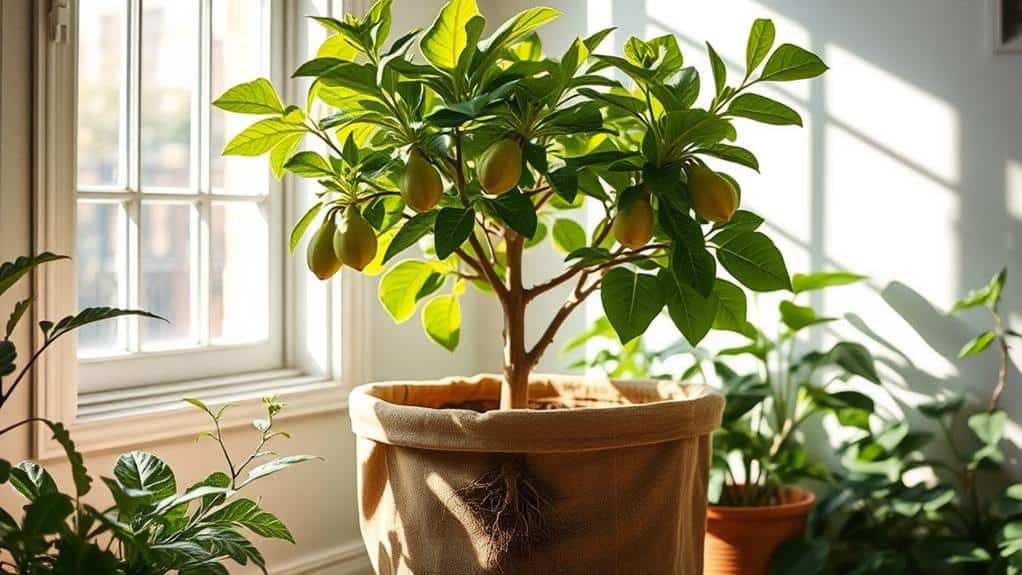
Fabric pots offer numerous advantages for maintaining the root health of indoor fig trees. The breathable material promotes air pruning, so roots naturally stop growing when they reach the fabric edge. This prevents circling, which can harm the plant.
The fabric allows for better aeration and drainage, reducing the risk of overwatering and root rot, common issues for fig trees.
Additionally, fabric pots are lightweight and portable, making it easy to move your fig tree to catch the perfect sunlight. They also help maintain consistent soil temperature, protecting roots from sudden temperature changes.
Fabric pots manage moisture well, retaining enough while providing proper drainage. This balance creates an ideal environment for your indoor fig tree to thrive.
Importance of Pot Size
Choosing the right pot size is super important for your indoor fig tree.
If the pot's too big, it can hold too much water and hurt the roots, but if it's too small, the roots won't have enough space to grow.
Aim for a pot that's about one-third the size of your tree, and make sure it has drainage holes to keep the roots healthy and happy.
Ideal Root Space
When it comes to growing an indoor fig tree, the importance of pot size can't be overstated. Choosing the right pot size is essential for your tree's root growth and overall health. A snug fit is key; a pot that's too big can retain too much moisture, leading to root rot.
Ideally, the pot should be about 1/3 of the tree's height. This guarantees enough space for the roots and provides proper drainage. Fig trees thrive in well-draining soil, so maintaining appropriate pot size helps mimic their natural environment.
Repotting every 1-2 years, or when roots become cramped, guarantees your fig tree has the space it needs to grow strong and healthy.
Growth and Stability
The pot's size directly impacts your fig tree's growth and stability. Selecting the right pot size is vital. If the pot is too large, it can retain excess moisture, leading to root rot.
A snug fit, ideally 1-2 inches larger than the current root ball for smaller plants or 2-3 inches for larger ones, encourages healthy root growth and stability. An oversized pot can make the tree unstable, while a too-small pot may cause circling roots that hinder nutrient absorption.
For visual balance and stability, the pot should be about 1/3 the size of the plant. An appropriate pot size also guarantees adequate drainage, essential for your fiddle leaf fig's health and growth.
Choose wisely for a thriving fig tree!
Drainage and Aeration
Proper drainage and aeration are essential for the health of your indoor fig tree. Without good drainage, your tree's roots can get waterlogged, leading to root rot. This is why a pot with drainage holes is a must.
The size of the pot also affects aeration. Choose a pot that's only 1-2 inches larger than the root ball. This snug fit helps with healthy root growth and prevents water retention issues.
I recommend terracotta pots because their porous nature promotes better aeration and moisture regulation. Don't forget to use a potting mix with perlite for enhanced drainage and aeration.
Regularly check the pot size; if roots start circling, it's time to repot to maintain ideal air and water flow.
Ensuring Proper Drainage
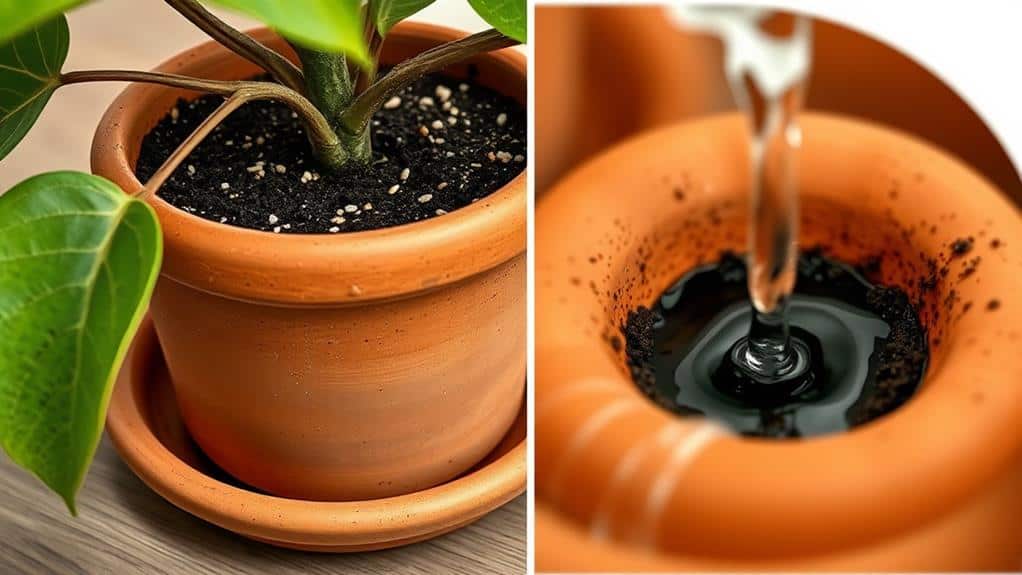
Selecting the right pot for your indoor fig tree is essential, and ensuring proper drainage is a key factor. Make sure your pot has drainage holes to prevent root rot from water accumulating at the bottom. I recommend terracotta pots; their porous nature helps air circulate and moisture evaporate, maintaining a healthy moisture level.
Adding small stones or drainage discs can enhance drainage and keep soil from escaping. Avoid oversized pots; they hold too much moisture. Regularly check the soil's moisture level and adjust your watering routine to keep your fig tree happy.
Here's a quick comparison to help you choose:
| Pot Type | Benefits | Considerations |
|---|---|---|
| Terracotta | Air circulation, moisture control | Can dry out quickly |
| Plastic | Lightweight, affordable | Less breathable |
| Ceramic | Aesthetically pleasing | Heavy, less porous |
Potting Mix Recommendations
When choosing a potting mix for your indoor fig tree, aim for a blend that balances moisture retention and drainage.
I recommend using potting mixes that contain 2/3 peat-based media and 1/3 perlite soil. This combination guarantees your fig tree gets enough moisture without becoming waterlogged.
Adding organic matter, like compost or worm castings, boosts nutrient availability and supports healthy root growth.
It's essential to avoid heavy soils that trap too much moisture. Instead, choose a loose, well-draining mix to promote proper aeration.
Maintaining a soil pH between 6.0 and 7.0 is also important for ideal growth.
Repotting Your Fig Tree
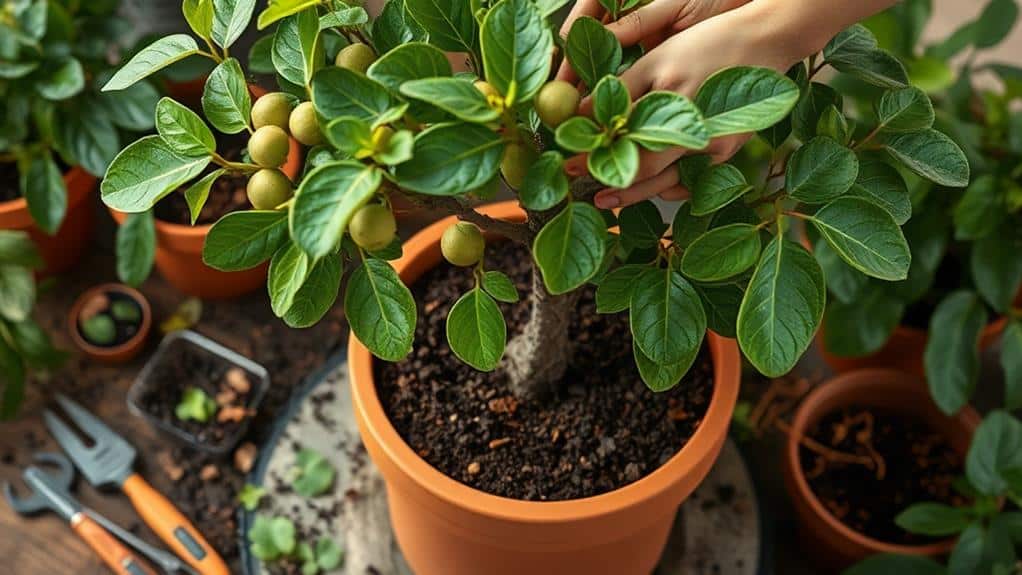
When it's time to repot your fig tree, pick a pot that's 1-2 inches larger in diameter than the current one to keep the roots healthy.
Use a well-draining potting mix with ingredients like peat moss and perlite, and make sure the new pot has drainage holes.
Gently loosen and fan out the roots before placing the tree in its new home, and water thoroughly to help it settle in.
Essential Repotting Steps
Before diving into the repotting process, prepare your workspace to handle any mess that might occur.
Make certain you have all your tools ready, including fresh potting mix and a new pot. Choose a container size that's 1-2 inches larger in diameter than the current one. This prevents over-potting and helps manage soil moisture.
Fill the new pot with 4-5 inches of well-draining soil.
Carefully remove your fig tree from its current pot, taking care not to damage the roots. Loosen any circling roots before placing the tree in the new container.
Once positioned, fill around the roots with potting mix, compact it lightly, and water thoroughly. This guarantees the soil settles and contacts the roots properly.
Ideal Pot Choices
Selecting the right pot for repotting your fig tree is essential for its health and growth. Terracotta pots are my top choice because they provide excellent aeration and help prevent root rot with their porous nature.
Always pick containers with drainage holes to let excess water escape, which keeps the roots healthy. When repotting, choose a pot just 1-2 inches larger in diameter than the current one, so the roots have room to grow without feeling overwhelmed.
Fabric pots are also great. They promote air pruning of roots, preventing them from becoming root-bound.
While plastic pots can work, make sure they've good drainage and ventilation; otherwise, they might retain too much moisture, leading to root rot.
Decorative Pot Options
Choosing the perfect decorative pot for your indoor fig tree can be both a fun and essential decision for its health and aesthetic appeal. Here are some options to take into account:
- Ceramic Pots: These are durable and stable, offering a stylish look. However, they can retain heat, which might affect the roots.
- Terracotta Pots: Made from natural clay, they allow excellent air circulation and moisture evaporation, which helps prevent root rot.
- Plastic Pots: Lightweight and affordable, but they mightn't provide enough breathability. Confirm proper drainage to avoid root-bound conditions.
Decorative metal pots are also trendy but may need insulation to prevent root overheating.
Each type has its benefits, so choose what fits your style and your fig tree's needs best!
Frequently Asked Questions
What Kind of Pot Is Best for a Fig Tree?
I recommend a terracotta pot for your fig tree. The pot material guarantees proper aeration, and drainage holes prevent root rot. Choose the right pot size to allow root health and growth, keeping your tree thriving.
Do Fig Trees Need Deep Pots?
No, fig trees don't need deep pots. Instead, prioritize pot size that supports root growth, has good drainage holes, and controls soil moisture. Ensuring proper drainage and a snug fit will help your fig tree thrive.
How Do You Pot an Indoor Fig Tree?
When potting an indoor fig tree, use potting soil with good drainage, water frequently but avoid overwatering. Make certain it gets bright, indirect light. Regular pruning techniques help maintain its shape and health.
Can I Grow a Fig Tree in a Pot Indoors?
Sure, you can grow a fig tree in a pot indoors! With proper fig tree care, indoor gardening becomes enjoyable. Choose good potting soil and explore different fig tree varieties to find the best fit for your space.
Conclusion
Choosing the best pot for your indoor fig tree doesn't have to be hard. Whether you go with terracotta, fabric, ceramic, or even wooden pots, each type has its own benefits. Just make sure your pot has good drainage and the right potting mix. By picking the right pot, you're setting your fig tree up for success. Trust yourself and enjoy watching your tree thrive. You've got this! Happy gardening!