Get Rid Of Bushes Growing Back From Roots
When facing the persistent issue of bushes growing back from roots, it's a bit more complex than just cutting them down. I've found that removing the entire root system is essential, but that's only the beginning. There's a meticulous process involving digging, cutting, and even using herbicides effectively. You might wonder why some bushes seem to grow back stronger or why certain methods fail. Let's explore the steps and tools needed to guarantee long-term success and tackle any challenges that might arise along the way.
Reasons for Bush Removal
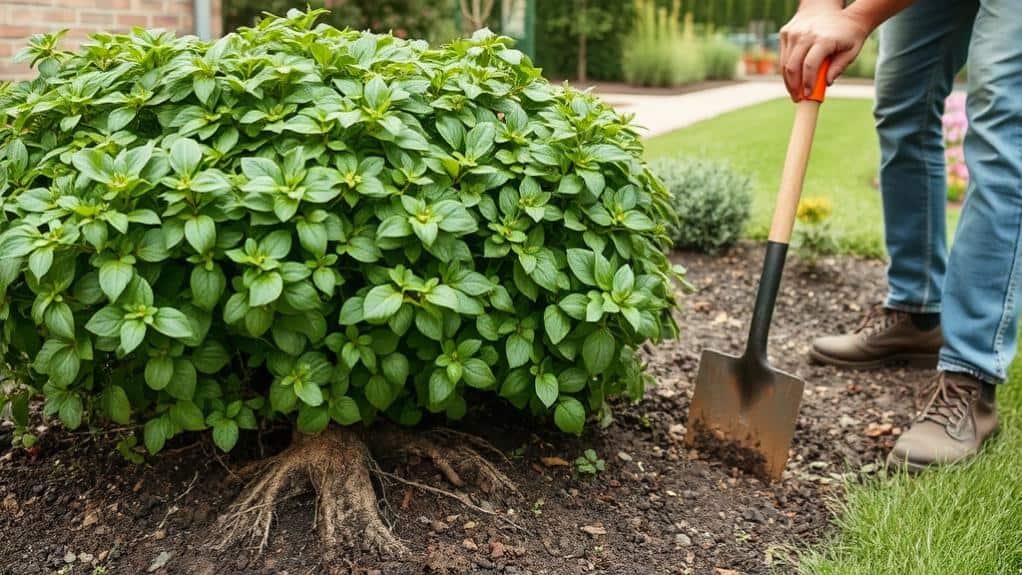
Removing bushes from your garden can be necessary for several compelling reasons.
First, if bushes are infested with pests or diseases, they can spread to other plants, threatening your garden's overall health. Overgrown bushes might block sunlight, preventing other plants from growing well.
Sometimes, the removal process is driven by a desire for a more attractive and organized garden. Deeply-rooted bushes can interfere with new plant growth, making it hard for desired plants to thrive.
Additionally, removing invasive or non-native species with large roots can enhance biodiversity and support local wildlife.
By addressing these issues, we can create a healthier and more beautiful garden environment.
Let's tackle those bushes together and rejuvenate our green spaces!
Local Regulations and Safety
Before diving into the task of bush removal, understanding local regulations and prioritizing safety is vital. First, check with your local authorities as some areas require permits, especially for larger bushes or trees.
You'll also need to contact local utility companies to mark any underground lines, which helps you avoid damaging essential services during the process.
Safety is equally important. Always wear protective clothing like gloves and eyewear to shield yourself from sharp tools and flying debris.
Make sure to keep children and pets at a safe distance to prevent any accidents. Finally, having a first aid kit on hand guarantees you're prepared for any minor injuries that might occur.
Prioritizing these steps makes bush removal safer and compliant with local rules.
Preparing for Bush Removal
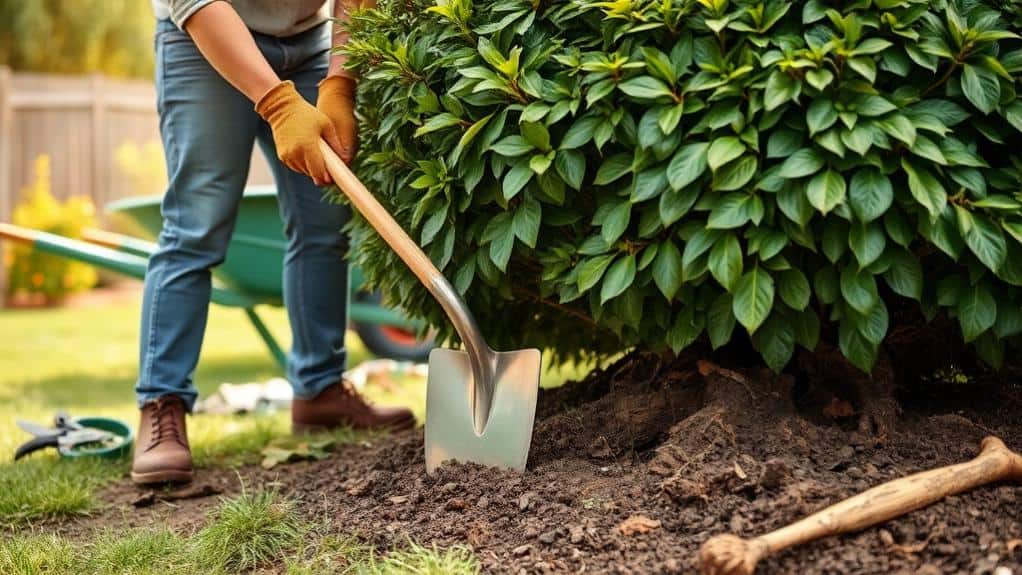
Before we start yanking those bushes out, let's make sure we've the right tools on hand, like saws, shovels, and loppers.
Clearing the area of any debris and obstacles will make the job safer and easier.
Trust me, you'll thank yourself later for planning and gathering all the gear and permits you need!
Tool Preparation Checklist
When you're gearing up for the task of bush removal, having a well-prepared tool checklist is essential. First, gather all necessary tools: a pruning saw, loppers, a shovel, and gloves. These will help you cut back and remove bushes effectively, right down to the root system.
Don't forget safety gear like protective eyewear and sturdy gloves to prevent injuries. For tough soil, a digging bar and pick-mattock are invaluable for accessing deep roots, especially in rocky areas.
If you're dealing with larger roots or stumps, consider renting a stump grinder to make the job easier. Finally, keep a first aid kit nearby in case of any accidents with sharp tools or heavy lifting.
Happy bush removal!
Clearing Surrounding Area
To start the bush removal process efficiently, clear the surrounding area of any debris or obstacles. This step is imperative for safe and smooth access to the bushes and their roots.
Here's what you need to do:
- Remove debris and obstacles: Clear away leaves, branches, and any objects that might get in the way.
- Assess bush size and space: Determine the space required for your tools and guarantee you've got enough room to maneuver.
- Mark underground utilities: Identify and mark any pipes or cables to avoid damaging them during digging.
- Wear safety gear: Put on gloves and eyewear to protect yourself from injuries.
Cutting and Pruning Techniques
Let's talk about the best ways to cut and prune bushes to stop them from growing back.
First, grab a pair of sharp loppers or pruning shears to cut the stems right down to ground level.
Make sure to keep an eye on the seasons; cutting back new sprouts consistently throughout the growing season will weaken the roots, and using herbicides on freshly cut stumps can help prevent resprouting.
Effective Pruning Tools
Getting rid of bushes from their roots requires effective pruning tools and techniques to secure the job is done right the first time around.
Here's what you'll need:
- Pruning shears: Use these for small branches and stems. They offer precision and help avoid damage to nearby plants.
- Pruning saw: Ideal for larger branches or trunk sections, this tool secures clean cuts that promote quicker healing.
- Loppers: Perfect for cutting tall bushes close to the ground, weakening the root systems to prevent regrowth.
- Sawzall with a 12-inch blade: Great for tough wood, this tool can efficiently cut through roots and trunks in one motion.
Seasonal Timing Tips
Timing plays a pivotal role in ensuring your bush-removal efforts are successful. Late winter or early spring is the best time to cut bushes because they're still dormant. This makes it easier to minimize regrowth and stress on nearby plants.
Throughout the growing season, keep an eye on new growth and cut it back regularly. This weakens the roots and stops unwanted bushes from re-establishing.
In early fall, plants send nutrients to their roots—perfect for applying herbicides effectively. Combining close-to-ground cuts with targeted herbicide can help deplete the roots' energy reserves.
Proper Cutting Techniques
When tackling the challenge of removing unwanted bushes, cutting all stems to ground level is essential. This technique helps weaken the plant and reduces its energy for regrowth.
To guarantee effective results, follow these steps:
- Use loppers for tall bushes: Make cuts as close to the ground as possible to minimize new shoots.
- Employ basic gardening tools: Pruning shears and weed eaters work well for precision cutting and managing smaller branches.
- Monitor for new sprouts: Regularly cut back any new growth to deplete the plant's energy reserves.
- Consider herbicides for invasive species: After cutting, applying heavy-duty herbicides can prevent stubborn regrowth and guarantee thorough elimination.
Digging and Root Removal
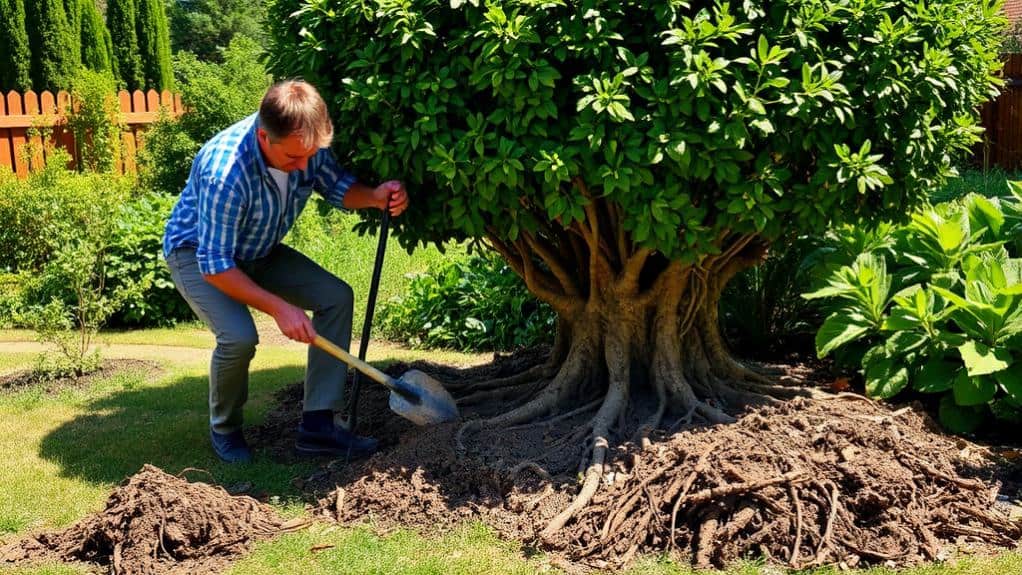
Removing bushes from their roots requires some effort, but it's definitely doable with the right approach.
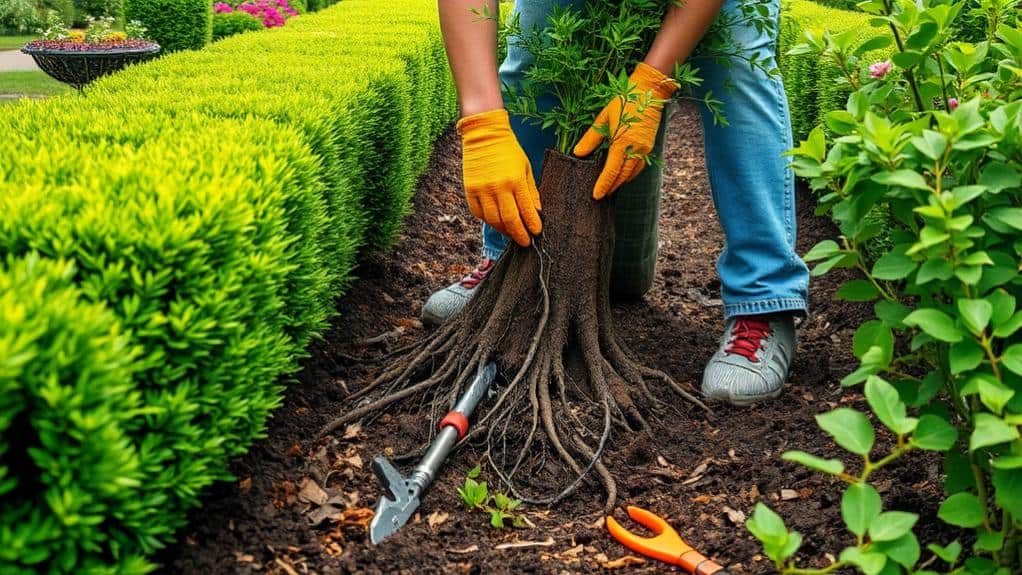
First, dig around the base to expose the root systems. This will give you a clear view of what you're dealing with. Use a saw or loppers to cut through any large roots.
A digging bar can be incredibly helpful for breaking through compact soil and reaching deeper roots. Be sure to remove the entire root bulb to prevent regrowth.
Sometimes, it takes a bit of careful digging and soil removal to get it all out. Keep an eye on the area after removal and promptly treat any new sprouts to stop the bush from re-establishing itself.
You've got this!
Herbicide Application
Applying herbicide is an essential step in guaranteeing that bushes don't make an unwelcome return.
To effectively tackle those stubborn roots, follow these steps:
- Select the Right Herbicide: Choose one designed for woody plants, containing glyphosate or triclopyr for tough bushes.
- Targeted Application: Paint the herbicide directly onto the freshly cut stump to guarantee it reaches the roots and minimize damage to other plants.
- Optimal Timing: Apply when temperatures are above 40°F and during the plant's active growth phase, typically late summer or early fall.
- Monitor and Reapply: Keep an eye on the treated area. If any new growth appears, be ready to reapply herbicide.
Managing Invasive Species
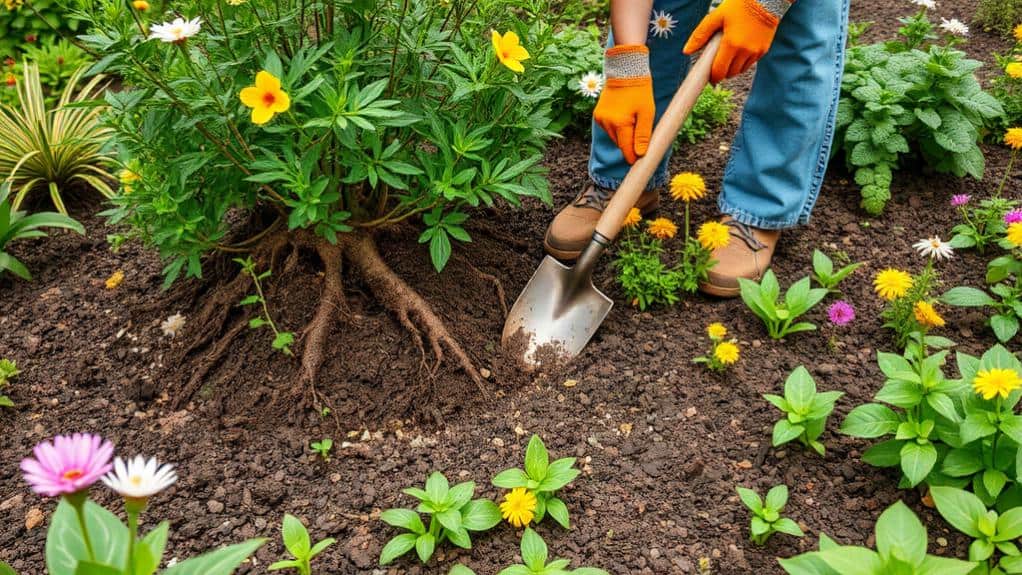
Managing invasive species like honeysuckle and trumpet vine can feel like a big job, but with the right strategies, it's totally doable.
First, identify these aggressive plants early and act fast with targeted herbicide applications, like painting herbicide on freshly cut stumps.
Combining this with manual removal techniques and regular monitoring will help keep your yard healthy and free from these pesky invaders.
Identification and Early Detection
Spotting invasive species early on, like honeysuckle and trumpet vine, really makes a difference in managing them effectively and preventing regrowth from their roots.
Regular monitoring is key to catching new growth before it becomes unmanageable. During the growing season, I make it a habit to inspect my garden frequently.
Here's how you can do it too:
- Identify common invasive species in your area.
- Look for new sprouts, especially near previously cleared areas.
- Mark the spots where you find new growth for easy follow-up.
- Remove or treat these sprouts promptly to prevent them from taking hold.
Targeted Herbicide Applications
When dealing with invasive species, targeted herbicide applications can make a world of difference in preventing regrowth from the roots.
By applying a heavy-duty herbicide like glyphosate or triclopyr directly to freshly cut stumps, you guarantee better absorption and minimal damage to nearby plants. For added effectiveness, mix a bit of acrylic paint with the herbicide. This helps you see where you've treated, so you don't miss any spots.
Apply the herbicide when temperatures are above 40°F, as warmer conditions enhance penetration. Early fall is ideal, as plants are transferring resources to their roots.
Manual Removal Techniques
Manual removal techniques can be highly effective for managing invasive species, especially when you catch them early.
Here's how you can tackle the problem:
- Identify early: Recognize invasive species like honeysuckle and trumpet vine before they spread.
- Cutting back: Regularly cut unwanted shrubs to ground level. This weakens their roots over time.
- Digging out roots: After cutting back, dig out as many roots as possible to prevent regrowth.
- Seasonal timing: The best time to act is early fall when plants are storing nutrients in their roots.
Seasonal Removal Strategies
Removing unwanted bushes effectively requires a keen understanding of seasonal strategies to tackle their persistent growth.
One key approach is employing cutting techniques during the dormant season. This minimizes stress on surrounding plants and boosts removal success.
Monitoring for new growth throughout the growing season is essential since many bushes resprout if the root system remains intact. Consistently cutting back any new growth helps weaken the root system over time, and repeated cutting depletes the plant's energy reserves.
Herbicide applications in early fall can be particularly effective, as plants direct resources to their roots during this period.
Documenting the timing and methods used throughout the seasons can help refine strategies for future efforts, ensuring better results with each attempt.
Tools and Equipment Needed
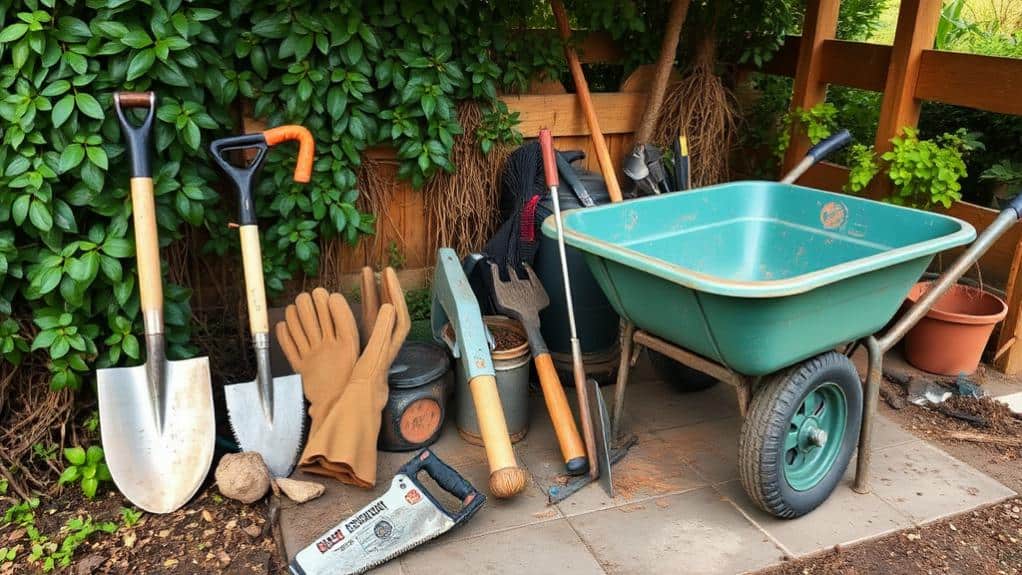
Understanding seasonal strategies is only part of the battle; having the right tools and equipment is equally important for successful bush removal.
Here's a list of essential tools to help you tackle those stubborn roots:
- Loppers and Pruning Saw: Loppers are perfect for cutting back stems, while a pruning saw handles larger branches.
- Shovel and Digging Bar: Use a shovel to loosen soil around roots and a digging bar to break through tough top roots.
- Chainsaw and Stump Grinder: A chainsaw is useful for larger shrubs, and a stump grinder helps remove stubborn roots.
- Protective Gear: Don't forget gloves, safety goggles, and sturdy footwear to keep yourself safe.
These tools make the task manageable and efficient.
Post-Removal Care and Maintenance
Once you've managed to clear out those stubborn bushes, it's crucial to focus on post-removal care to guarantee your landscape remains healthy and inviting.
Start by filling any holes with quality topsoil and water the area to create ideal soil conditions. Regularly check for any signs of regrowth from remaining roots and address them promptly.
Conduct a soil test to assess nutrient levels and amend the soil as needed. Applying mulch will help suppress weeds and conserve moisture, preventing new growth from any lingering roots.
Consider replanting native species to boost biodiversity and guarantee a resilient landscape. With diligent post-removal care, your yard will soon be ready for new, vibrant plantings.
Frequently Asked Questions
How to Stop Bush Roots From Growing Back?
To stop bush roots from growing back, I use effective pruning techniques and install root barriers. Cutting stumps close to the ground and applying herbicide or natural solutions like salt helps too. Persistence is essential for success.
How to Get Rid of Deep Rooted Bushes?
When dealing with deep-rooted bushes, I first use proper pruning techniques to cut them down. Then, I dig around the roots and install root barriers to prevent regrowth, ensuring they don't come back.
What Kills Bushes Permanently?
To kill bushes permanently, I recommend using heavy-duty herbicide options directly on freshly cut stumps. You could also consider installing root barriers to prevent regrowth. These methods are effective and straightforward for long-term results.
How Do You Permanently Remove Bushes?
To permanently remove bushes, I recommend these bush removal techniques: cut stumps to ground level, apply herbicide, and use copper spikes. Landscape maintenance tips include monitoring for new sprouts and using salt or sunlight deprivation to kill the roots.
Conclusion
You've got this! Getting rid of bushes growing back from roots might seem tough, but with the right steps, it's totally doable. Remember to remove the entire root system, use herbicides on fresh stumps, and keep an eye out for new growth. With a little patience and regular maintenance, you'll have a clear, bush-free space in no time. So, grab your tools, follow these tips, and you'll be well on your way to a tidy garden!