How To Plant A Garden On A Deck
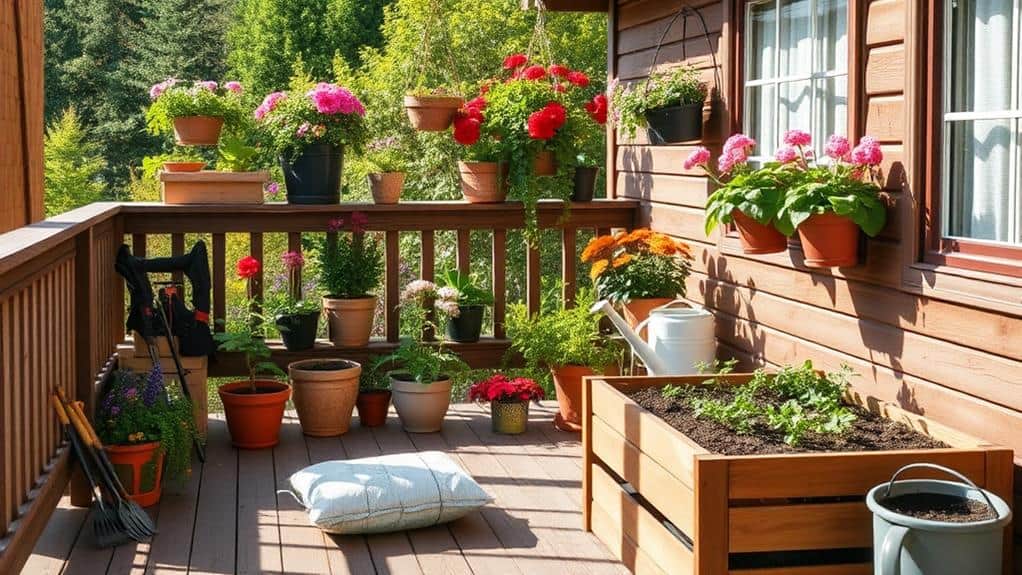
When you're thinking about planting a garden on your deck, start by choosing the right containers; larger ones with drainage holes will help your plants thrive by preventing root rot. Position your containers in a spot that gets at least 8 hours of sunlight daily, as most herbs and vegetables need plenty of light. High-quality organic potting soil is essential for healthy growth. Don't forget to use vertical space with hanging baskets or trellises for vining plants. Curious about how to keep your new garden vibrant and pest-free while making the most of your space?
Choosing Containers
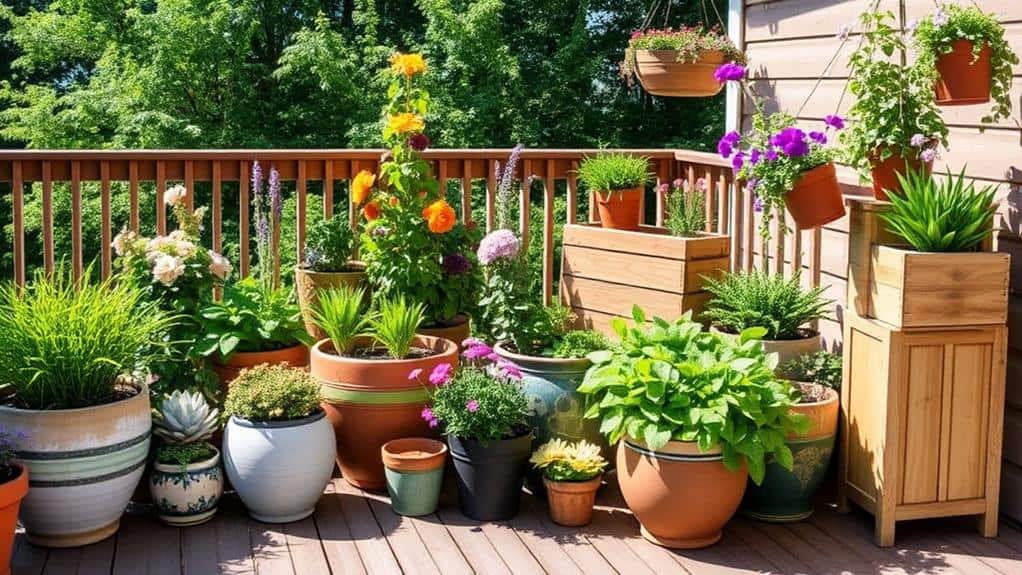
When choosing containers for your deck garden, go for larger pots, ideally between 12-24 inches, to support robust root growth and reduce how often you'll need to water.
Make certain all containers have proper drainage holes to prevent waterlogging, which harms plant roots.
Lightweight materials like plastic or glazed ceramic make it easy to move pots around to catch the best sunlight.
For any edible plants, choose food-safe materials to guarantee your produce is safe and healthy.
Elevated containers or pot risers not only protect your deck surfaces from water damage but also enhance air circulation.
Understanding Growing Conditions
Understanding the growing conditions on your deck is essential for a thriving garden. Most vegetables and herbs need at least 8 hours of full sun daily, while leafy greens do well with 4-6 hours.
Your containers should have drainage holes to prevent waterlogging, which can cause root rot. Use high-quality organic potting soil designed for containers to guarantee good drainage and nutrient retention.
Position your pots near a water source for easy access, and place them where they'll get rainwater but not too much. Regularly check the moisture levels, as containers dry out faster than garden soil, especially in hot weather.
With these tips, your deck garden will have the best chance to flourish.
Benefits of Deck Gardening
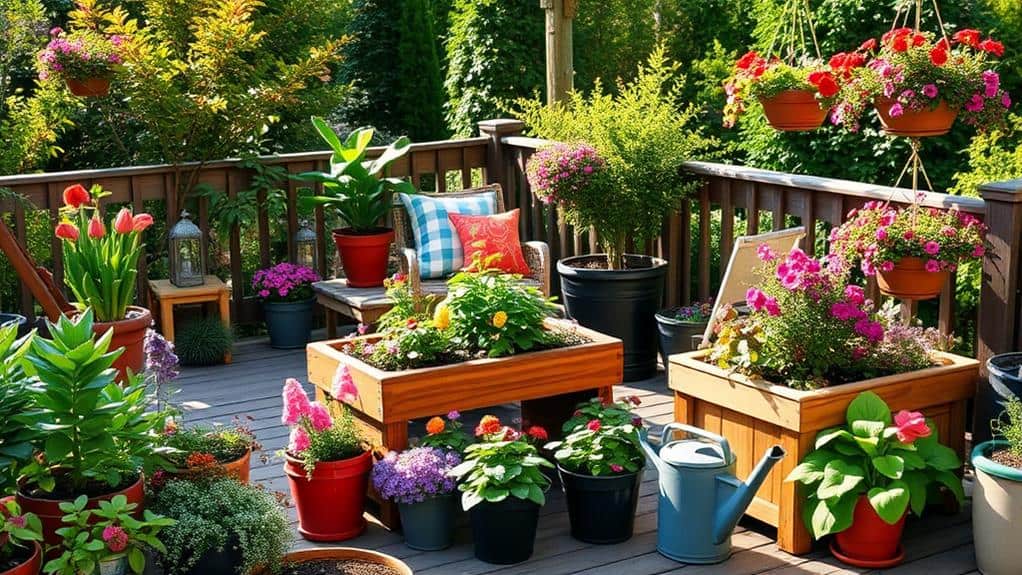
Deck gardening offers many benefits that you'll love.
You'll have easy access to fresh herbs and veggies right outside your door, which means healthier meals and less reliance on store-bought produce.
Plus, managing pests and diseases becomes simpler, and your deck will look beautiful with colorful plants that can brighten any space.
Fresh Produce Accessibility
Imagine stepping out onto your deck and plucking fresh herbs and vegetables right from your own garden—an experience that deck gardening brings directly to your fingertips. With a container garden, you can grow organic produce right on your patio, making meal prep a breeze. Home-grown vegetables often taste better and are more nutritious than store-bought ones. Plus, growing your own food helps you save money, especially on organic produce. You won't need to worry about extensive maintenance either, as deck gardening reduces common soil and pest issues. Monitoring plant health is easier too, guaranteeing high-quality produce.
| Benefit | Description | Impact |
|---|---|---|
| Immediate Access | Fresh produce right outside your door | Convenient for cooking |
| Higher Nutrient Levels | Home-grown vegetables retain nutrients and flavor | Healthier meals |
| Reduced Maintenance | Container gardening minimizes soil and pest problems | Less work for you |
| Cost-Effective | Cuts down grocery bills, especially for organic produce | Saves money |
| Easy Monitoring | Early detection of pests and diseases | Guarantees quality of produce |
Enhanced Outdoor Aesthetics
Incorporating a deck garden not only elevates the functionality of your outdoor space but also enhances its visual appeal.
Imagine colorful flowers and vibrant herbs creating a lush environment right on your deck. Using a container garden lets you experiment with different pot styles, reflecting your personal taste.
Vertical gardening structures, like trellises and hanging baskets, add texture and dimension, making your space feel more dynamic. Seasonal plant selections, such as long-blooming annuals and tropical plants, keep your deck garden looking fresh year-round.
Combining herbs with flowers not only looks beautiful but also attracts pollinators, contributing to a thriving ecosystem.
Your deck can transform into a stunning green oasis, full of life and color.
Simplified Pest Control
While transforming your deck into a lush green oasis, you'll also enjoy another significant benefit: simplified pest control.
Deck gardening naturally reduces pest issues compared to traditional gardens. Here's why:
- Elevated Location: Your container gardens are elevated, deterring pests like rodents and larger animals.
- Strategic Placement: Positioning your containers away from pest hotspots makes it easier to monitor and manage infestations.
- Companion Planting: Use herbs and flowers to naturally repel pests, boosting the health of your edible plants.
Regular inspections of your container gardens are simpler on a deck, allowing you to catch and control any pest problems early.
With these advantages, maintaining a healthy, pest-free garden becomes a more manageable task.
Selecting Herbs and Vegetables
Choosing the right herbs and vegetables for your deck garden is essential for a thriving, productive space. Opt for herbs like Sweet Basil, Cilantro, and Dill, which thrive in full sun and are ideal for container growth.
When it comes to vegetables, choose container-specific varieties like the Sweetheart of the Patio Hybrid tomato and Husky Red Cherry Tomato. These are space-efficient and perfect for small areas.
Leafy greens such as lettuce and Swiss chard do well in pots with 4-6 hours of sunlight, making them great for partially shaded spots.
Don't forget companion plants like marigolds, which help control pests and add beauty.
| Plant Type | Varieties |
|---|---|
| Herbs | Sweet Basil, Cilantro, Dill |
| Vegetables | Sweetheart of the Patio Hybrid tomato, Husky Red Cherry Tomato |
| Leafy Greens | Lettuce, Swiss Chard |
| Companion | Marigolds |
Seasonal Planting Tips
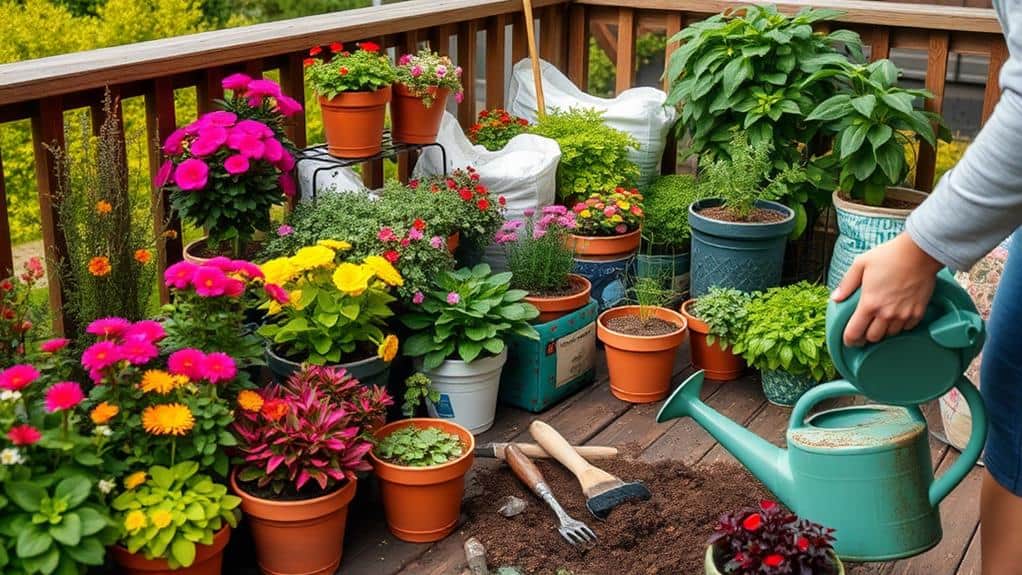
When planting your garden on a deck, it's important to adjust your methods with the seasons.
In spring, wait until the last frost passes before planting tender crops like basil and peppers, making sure they get plenty of sunlight.
During summer, keep plants hydrated and protect them from extreme heat, while fall is the perfect time to harvest herbs like cilantro and parsley, and start planning for cold-tolerant plants.
Spring Frost Precautions
Spring frosts can be a gardener's nemesis, catching you off guard even when daytime temperatures feel quite warm. To protect your seedlings from unexpected spring frosts, follow these spring frost precautions:
- Monitor Last Frost Date: Wait until after the last frost date in your area before transplanting frost-sensitive plants like basil and peppers outdoors.
- Use Protective Covers: Cloches, row covers, or frost blankets can shield your seedlings from sudden cold snaps, especially in late April or early May.
- Harden Off Plants: Gradually expose your plants to outdoor conditions for a week before moving them permanently to the deck. This helps them acclimate and reduces the risk of frost damage.
Summer Heat Protection
Summer heat can be brutal on your deck garden, but with a few strategic steps, you can guarantee your plants thrive.
First, regularly check soil moisture levels and water containers deeply to prevent them from drying out. Containers dry faster than in-ground gardens, so stay vigilant.
Use shade cloth or place taller plants to shield heat-sensitive ones from direct sunlight. Increase air circulation by spacing your containers apart. This reduces heat stress and minimizes disease risk.
Consider self-watering containers to maintain consistent moisture during hot spells. Apply mulch on top of the soil to retain moisture and keep root zones cooler.
With these summer heat protection tips, your deck garden will flourish even in the hottest months.
Fall Harvest Preparation
As autumn approaches, it's time to embrace the bounty of your deck garden with some strategic fall harvest preparation. Focus on harvesting cilantro and parsley before frost sets in; they're ready about 3-4 weeks after planting.
To prepare for winter:
- Add compost to your containers to replenish nutrients and guarantee good drainage for remaining plants.
- Plant cold-tolerant herbs like thyme and chives, which can handle light frosts and keep your meals flavorful.
- Insulate your containers by either moving them to a sheltered spot or wrapping them with insulating materials to protect against harsh weather.
After harvesting, remember to clean and sanitize your containers to prevent pests and diseases, setting the stage for a successful spring planting season.
Nutritional and Cost Benefits
Home-grown produce from your deck garden isn't only a delight to cultivate but also a powerhouse of nutritional and financial benefits.
By growing your own organic produce, you can enjoy up to 25% more vitamins and minerals, enhancing your diet with healthier options.
Container gardening on your deck allows for multiple harvests, giving you fresh ingredients whenever you need them. This practice can save you $300 to $500 annually on grocery bills.
Plus, it's a sustainable choice that lowers your carbon footprint by reducing the need for transporting produce.
Home-grown herbs and vegetables also offer improved flavor profiles, making your meals tastier.
Embrace this rewarding hobby and enjoy its many benefits for both your wallet and wellbeing.
Utilizing Deck Space
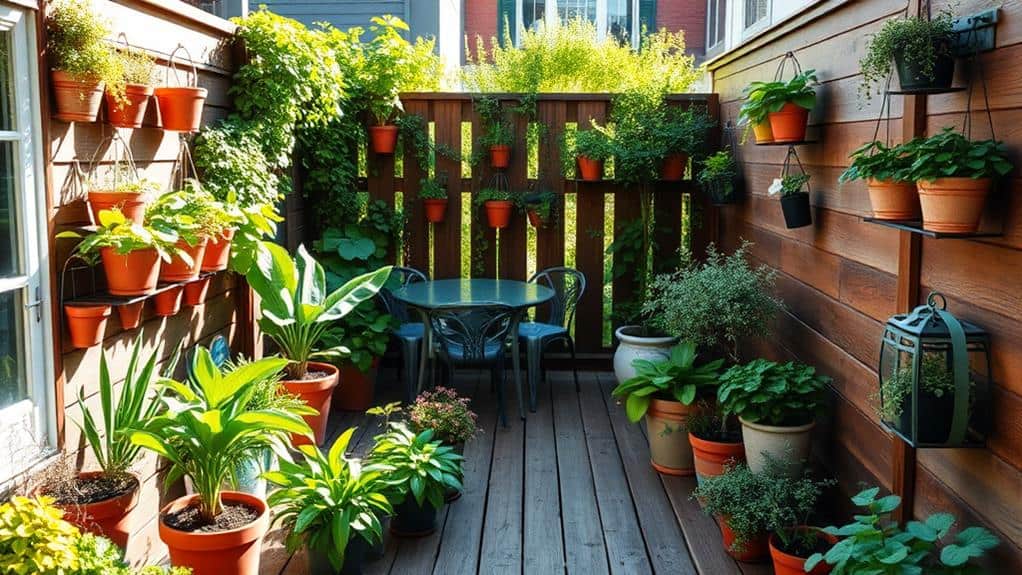
To make the most of your deck space, start by evaluating the architecture to find the best areas for planting, ensuring your containers get plenty of sunlight and are easy to reach.
Use over-railing planters, hanging baskets, and trellises to maximize vertical space, which allows you to grow more plants without taking up floor space.
Choose large, lightweight containers with proper drainage so you can move them as needed and keep your deck neat and organized.
Maximizing Vertical Space
Maximizing vertical space on your deck can transform it into a lush, productive garden without sacrificing precious floor area. You can create vertical gardening opportunities in several ways:
- Over-railing planters: These add planting space without taking up deck floor area, perfect for herbs or flowers.
- Hanging baskets: Ideal for strawberries or cascading cherry tomatoes, they use vertical height and add visual interest.
- Trellises: Support vining plants like cucumbers and pole beans. They make great use of vertical space and improve air circulation.
Additionally, consider vertical garden structures such as wall-mounted or pocket planters to turn vertical surfaces into productive gardening areas.
These methods help you maximize limited deck space efficiently while creating a stunning garden.
Choosing Container Types
Once you've maximized vertical space, the next step is choosing the right container types to utilize your deck space efficiently.
For limited deck space, window boxes are perfect for shallow-rooted crops like lettuce and spinach. Hanging baskets work wonders for strawberries and cascading cherry tomatoes, allowing vertical growth and saving floor area.
Vertical structures like trellises support vining plants such as cucumbers and pole beans, making full use of your deck's height. Large containers provide ample root growth and reduce watering frequency, ideal for busy gardeners.
Consider upcycled containers—old bookshelves or wooden crates—for a unique, space-saving touch.
Ensuring Proper Drainage
Proper drainage is essential for maintaining a healthy deck garden. Without it, your plants might suffer from root rot and poor growth. Here's how you can guarantee proper drainage:
- Use containers with drainage holes: These allow excess water to escape, preventing waterlogging.
- Elevate containers: Place pot risers or bricks under your containers. This improves air circulation and lets excess water drain away easily.
- Choose a well-draining potting mix: This type of soil retains enough moisture but allows excess water to flow out, maintaining good soil moisture levels.
Regularly check your container drainage and adjust as needed.
Opt for lightweight containers like plastic or glazed ceramic to make moving them easier and prevent deck damage.
Happy gardening!
Essential Gardening Tools
Getting your deck garden started requires a few essential gardening tools that make the process smooth and enjoyable. You'll need a small rake and a hoe for soil preparation, which are perfect for confined spaces. Invest in quality gloves to protect your hands from rough soil and prickly plants. A watering can or a hose with a spray nozzle is vital for watering, especially since containers dry out quickly. Use a trowel for digging precise holes for planting seeds and seedlings. Finally, consider a soil thermometer to check soil temperature and guarantee ideal conditions for your herbs and vegetables.
| Tool | Purpose | Benefit |
|---|---|---|
| Small Rake | Soil preparation | Easy to handle in small spaces |
| Hoe | Soil preparation | Efficient for confined areas |
| Quality Gloves | Hand protection | Comfortable gardening |
| Watering Can | Efficient watering | Keeps soil hydrated |
| Soil Thermometer | Monitor soil temperature | Guarantees ideal planting |
Watering and Maintenance
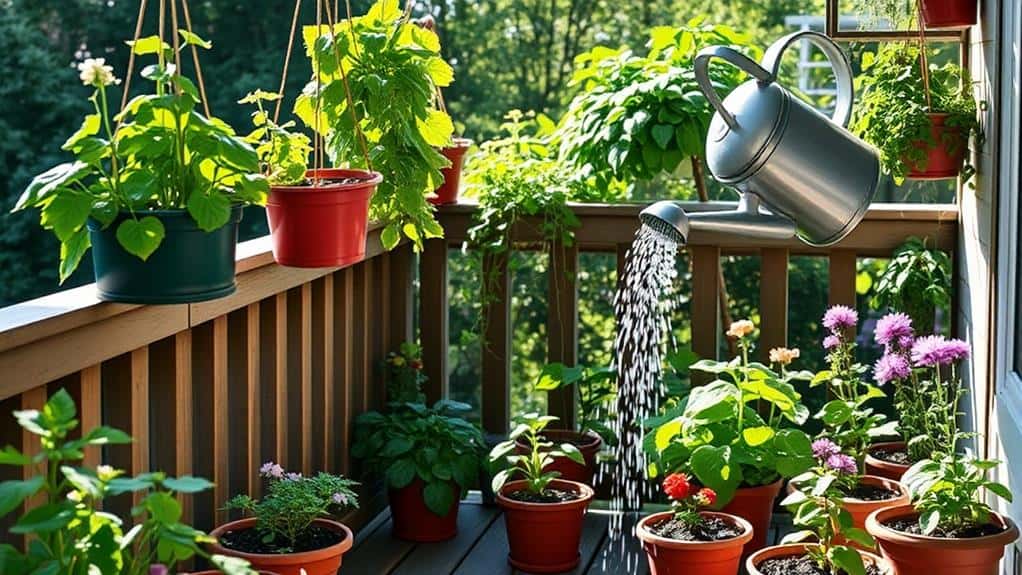
With your vital gardening tools ready, you're well-equipped to start caring for your deck garden. Regular deep watering is essential for container gardens, especially during hot weather. Aim to water at least once daily on scorching days.
To simplify your gardening tasks, follow these steps:
- Place pots near a water source for easy, quick watering.
- Monitor soil moisture by checking the top inch of soil with your finger. If it's dry, it's time to water.
- Use self-watering pots or drip irrigation systems for consistent moisture levels.
Additionally, apply organic fertilizer every 3-4 weeks to nourish your plants. This schedule supports healthy growth and guarantees your deck garden thrives.
Creative Gardening Ideas
Deck gardening doesn't have to be limited by space constraints and, with a dash of creativity, you can transform it into a lush oasis.
Use vertical gardening techniques like trellises, wall planters, and hanging baskets to display cascading plants and flowers.
Upcycle old furniture, such as bookshelves or wooden crates, to create unique planters that add charm.
Mix edible plants with flowers like marigolds to attract pollinators while being productive.
Implement tiered planting designs to add depth in a compact area.
Try a "food fountain" with stacked pots for a creative gardening feature that saves space.
With these ideas, your deck can be both beautiful and functional.
Frequently Asked Questions
How Do I Start a Garden on My Deck?
First, assess sunlight requirements for your deck. Use container gardening essentials like large pots with drainage. Follow soil selection advice by choosing quality potting soil. Implement watering techniques, manage pests, and refer to a seasonal planting guide.
How Do You Arrange Plants on a Deck?
Arrange your deck plants by spacing containers to guarantee airflow. Use various container types, consider sunlight needs, and organize by plant height. Rotate seasonally for year-round beauty. Incorporate aesthetic designs for a pleasing, maintenance-friendly setup.
What Plants Can I Grow on a Deck?
You can grow a variety of plants on a deck using container gardening. Consider sun exposure, proper drainage solutions, and plant selection. Try seasonal planting with herbs, compact vegetables, and vertical gardening with vining plants for efficient space use.
How to Grow a Vegetable Garden on a Patio?
To grow a vegetable garden on a patio, embrace container gardening and vertical gardening. Focus on soil selection, watering techniques, and pest control. Guarantee seasonal planting and sunlight exposure for ideal growth. You'll enjoy fresh, homegrown produce.
Conclusion
You've got all the tools and tips to start your deck garden now! By choosing the right containers, understanding your plants' needs, and making the most of your space, you'll create a thriving garden. Remember to water regularly and keep an eye out for pests. Don't be afraid to experiment and have fun with different plants. With a little effort and care, your deck will soon be bursting with fresh herbs and vegetables. Happy gardening!