Protect Monarch Butterflies From Wasps In Your Garden
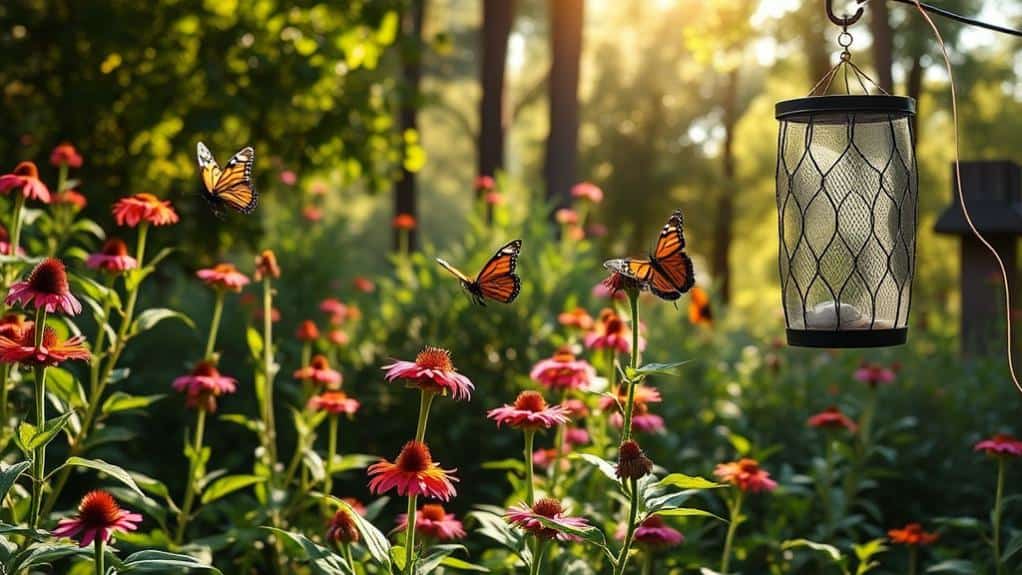
I've noticed a concerning trend in my garden: wasps preying on monarch butterfly caterpillars. It's disheartening, especially knowing how essential monarchs are for pollination. To tackle this, I've started using tomato cages wrapped in insect netting to protect the caterpillars. Additionally, I've planted flowers like Queen Anne's Lace to distract the wasps and herbs like lemongrass to repel them. But this is just the beginning. There are more techniques and strategies that can make a significant difference in safeguarding these beautiful pollinators. Let's explore how we can create a haven for monarchs amidst these challenges.
Importance of Monarch Butterflies
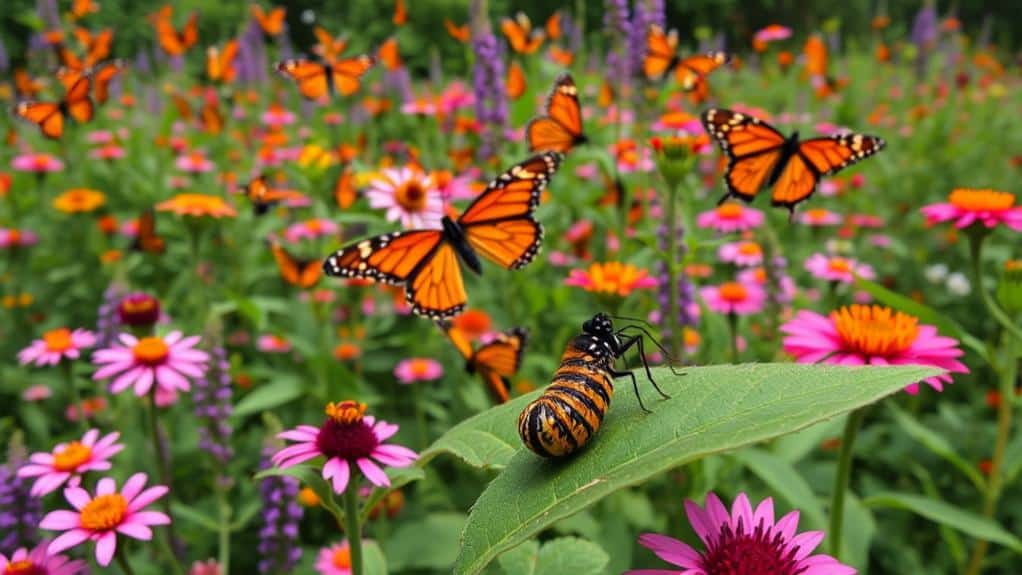
Monarch butterflies play an essential role in our ecosystems. They act as pollinators, helping plants reproduce, and provide food for other animals.
Monarch caterpillars depend on milkweed for survival and development. However, these caterpillars face many threats, and over 95% don't make it in the wild due to predators like wasps.
The decline in monarch populations, more than 80% in the last twenty years, is concerning. Their loss impacts biodiversity and the health of our ecosystems.
Protecting monarch butterflies is critical, not just for their survival, but for the balance of nature. By understanding the importance of monarch caterpillars and the challenges they face, we can take steps to support and protect these essential insects.
Primary Food Source: Milkweed
Let's talk about milkweed, the essential plant monarch caterpillars need to survive.
With 26 different species to choose from, you can grow the perfect variety in your garden, no matter where you live.
Milkweed Plant Varieties
When it comes to supporting monarch caterpillars, planting a diverse array of milkweed species can make a significant impact. With 26 different types of milkweed plants available, each offering unique benefits, you can truly enhance your garden's biodiversity.
Monarch caterpillars rely on these plants for essential nutrients and habitat. By planting a variety, you guarantee there's always food available since different species bloom at different times.
Additionally, milkweed attracts other beneficial pollinators, making your garden healthier overall. Conservation efforts have shown that increasing milkweed habitats is key to helping monarch populations recover.
Ideal Growing Conditions
Creating the ideal growing conditions for milkweed is essential for supporting monarch caterpillars. By ensuring your milkweed thrives, you'll provide the nutrients monarch larvae need and attract other beneficial pollinators.
Here's how to do it:
- Sunlight: Milkweed loves sunlight! Make sure it gets at least six hours of direct sunlight each day.
- Soil: Plant milkweed in well-draining soil. It doesn't like to be waterlogged, so avoid heavy clay soils.
- Water: Water your milkweed regularly, especially during dry spells. Keep the soil consistently moist but not soggy.
Planting and Maintenance
Milkweed is the cornerstone of a thriving monarch habitat, and planting and maintaining this essential plant in your garden will greatly contribute to the survival of these beautiful butterflies.
Start by choosing from the 26 species of milkweed available, ideally opting for native varieties to boost local biodiversity. Plant milkweed in sunny spots and make sure the soil is well-drained.
To keep wasps away, cover the milkweed with tomato cages wrapped in insect netting after monarch eggs are laid. Regularly check for eggs and remove any competing weeds to maintain a healthy environment.
Protective Covers for Caterpillars
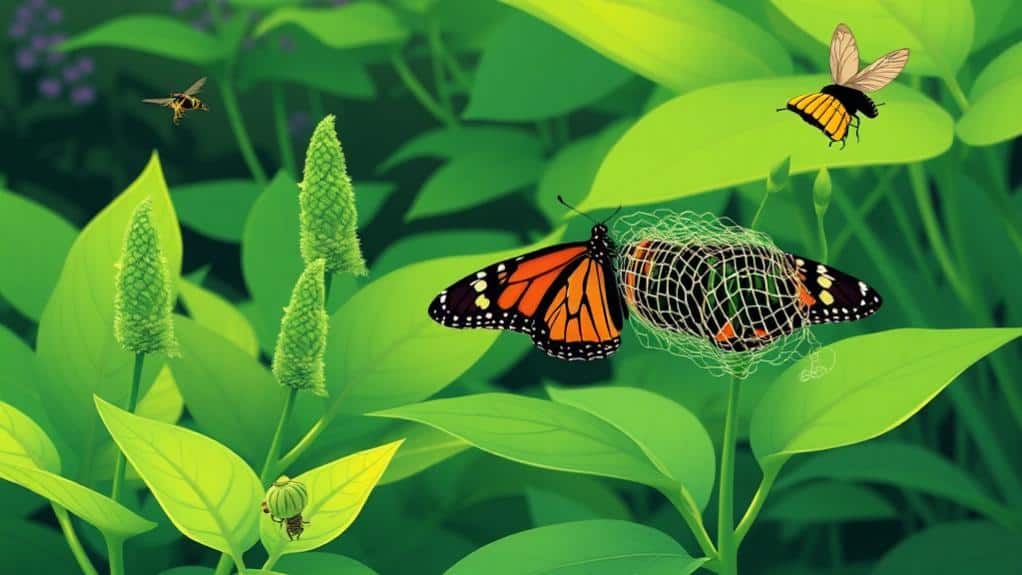
Safeguarding the safety of monarch caterpillars from wasp predation is crucial for their survival, and one effective method is using protective covers.
By using tomato cages wrapped in insect netting, you create a barrier that keeps wasps out while allowing sunlight and rain in.
Here are three steps to guide you:
- Wrap tomato cages: Secure insect netting around them to protect caterpillars.
- Use mesh bags: Place them over potted milkweed plants to keep wasps at bay.
- Check regularly: Look for monarch eggs before installing covers to guarantee immediate protection once they hatch.
These protective covers not only safeguard caterpillars but also support a balanced garden ecosystem.
Happy gardening!
Attracting Wasps Away
To attract wasps away from your monarch caterpillars, try planting nectar-rich flowers like Queen Anne's Lace, sunflowers, and goldenrod in a different part of your garden.
You can also use strong-scented plants like lemongrass, lavender, sage, and thyme to keep wasps at bay, creating a safer environment for the caterpillars.
Plant Nectar-Rich Flowers
Brightly colored and nectar-rich flowers like Queen Anne's Lace, sunflowers, and goldenrod can draw wasps away from monarch caterpillars, offering them a better chance at survival.
By planting these flowers, you can create a more balanced garden ecosystem where both wasps and monarchs thrive.
To help you get started, here are three nectar-rich flowers to contemplate:
- Queen Anne's Lace: Its delicate white flowers attract wasps, keeping them occupied.
- Sunflowers: Their bright blooms provide ample nectar, appealing to various pollinators.
- Goldenrod: This late-blooming flower is an excellent nectar source, especially in fall.
Utilize Scented Deterrents
While planting nectar-rich flowers helps to balance your garden ecosystem, another effective strategy to protect monarch caterpillars involves utilizing scented deterrents. Planting strong-scented flowers like lemongrass, lavender, sage, and thyme can repel wasps and attract beneficial pollinators. These aromatic plants mask the presence of caterpillars, making it harder for wasps to find their prey. By placing these deterrent plants alongside milkweed, you create a balanced environment that supports monarchs and essential pollinators. Strategically positioning these plants throughout the garden not only reduces wasp activity but also enhances biodiversity.
Here's a quick reference table:
| Plant | Benefit |
|---|---|
| Lemongrass | Repels wasps |
| Lavender | Attracts beneficial pollinators |
| Sage | Masks caterpillar scent |
| Thyme | Promotes garden biodiversity |
Using scented deterrents makes your garden a safer haven for monarch butterflies!
Utilizing Deterrent Plants
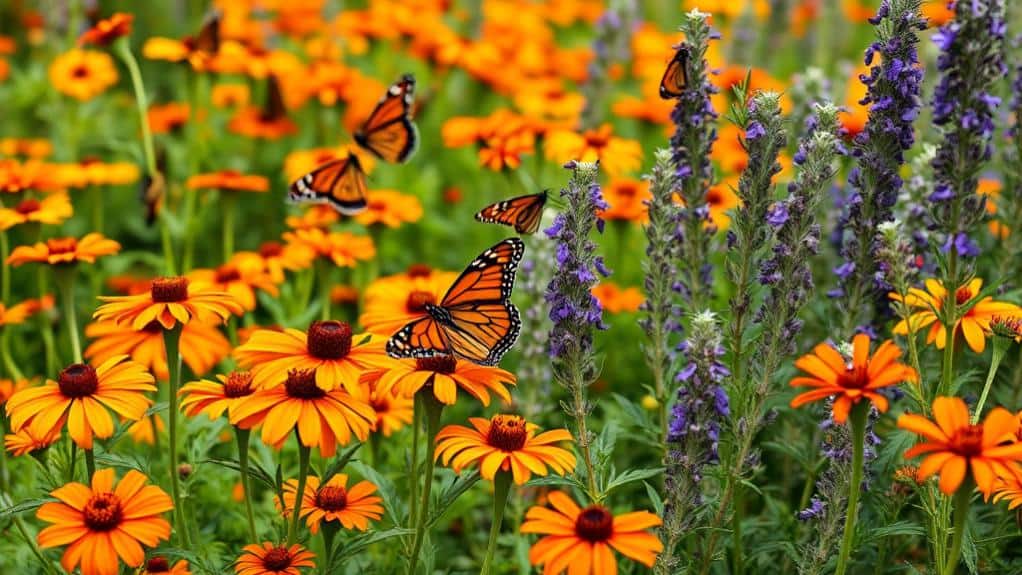
Strong-scented plants like lemongrass, lavender, sage, and thyme can make a significant difference in safeguarding monarch caterpillars from wasps.
By planting these deterrent plants, you create a natural barrier that keeps harmful wasps at bay.
Here's how you can use deterrent plants effectively:
- Planting Strategy: Position lemongrass and lavender around your garden's perimeter to form a protective shield.
- Companion Planting: Place thyme and sage near milkweed, where monarch caterpillars thrive, to guarantee added protection.
- Regular Monitoring: Keep an eye on your garden, making sure these deterrent plants are healthy and thriving, which helps maintain their repelling properties.
Enhancing Garden Biodiversity
After establishing a protective barrier with deterrent plants, it's important to further bolster our garden's defenses by enhancing its biodiversity. Incorporating a variety of native plants can create a healthier ecosystem for Monarch Butterflies and other pollinators.
Aim for at least 70% native plant biomass; this guarantees specific insects thrive, providing food for birds that help manage predator populations.
Planting nectar-rich flowers alongside milkweed attracts beneficial insects and distracts wasps, reducing threats to monarch caterpillars. A diverse garden layout supports a wide range of insects and natural predators, boosting caterpillar survival rates.
Regularly monitoring and maintaining a balance of plant species promotes cohabitation and supports overall ecosystem health. Let's make our gardens vibrant and welcoming for Monarch Butterflies!
Effective Gardening Techniques
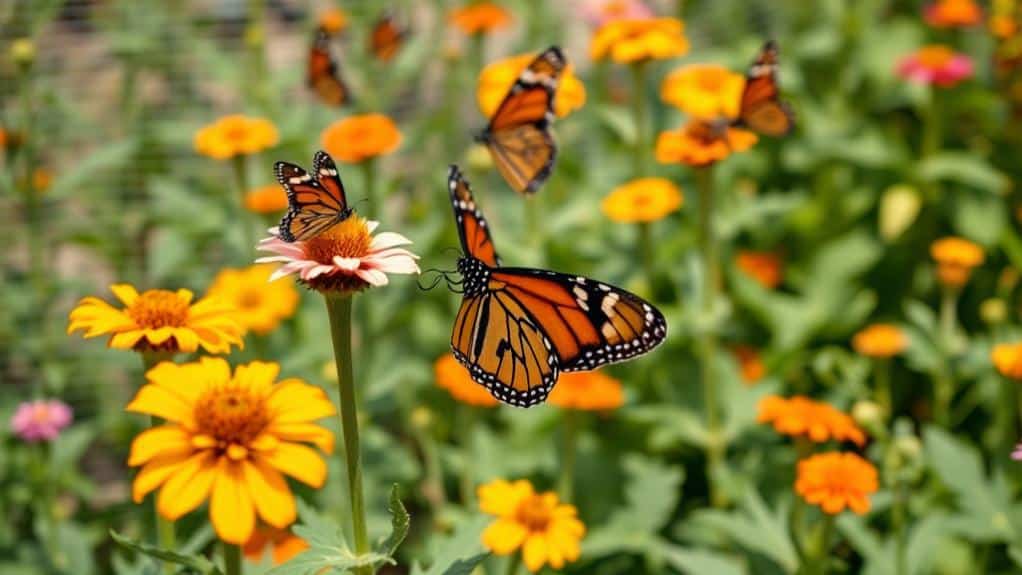
How can we protect our monarch caterpillars from wasp predation while still maintaining a balanced ecosystem? Here are some effective gardening techniques I've found helpful:
- Protective Covers: After monarch eggs are laid on milkweed, I cover the plants with tomato cages and insect netting. This shields the caterpillars from wasps effectively.
- Regular Checks: I always check for monarch eggs on milkweed before applying protective measures. This guarantees caterpillars can thrive without interference.
- Companion Planting: By planting nectar-rich flowers like sunflowers and Queen Anne's Lace, I attract wasps away from caterpillars, maintaining balance in the ecosystem.
These steps have made my garden a safer haven for monarch caterpillars while supporting overall biodiversity.
Characteristics of Paper Wasps
Let's talk about paper wasps—these insects have slender, elongated bodies that set them apart from other wasp species, and their orange and black coloring makes them easy to spot.
They build small, pear-shaped nests from wood fibers, usually hanging them from shrubs, trees, or eaves.
Unfortunately, their diet includes caterpillars, which means they often prey on monarch caterpillars in our gardens.
Physical Appearance Description
Characterized by their long, slender bodies, paper wasps are easy to distinguish from other wasp species like German and common wasps. Their unique appearance sets them apart, making them easier to identify in your garden.
Here are three key features to look for:
- Coloration: Paper wasps have a distinct orange and black pattern, unlike the typical yellow and black of other wasps.
- Waist: They've an obvious waist between their abdomen and wings, giving them a unique silhouette.
- Nest: Their nests are small, pear-shaped, and made from wood fibers and saliva, usually hanging from shrubs, trees, or under eaves.
Nest Building Habits
Paper wasps are fascinating builders, creating nests that are both functional and intricate. These wasps have longer, slender bodies and a distinct orange and black coloration, making them easy to spot.
Their nests are relatively small, often pear-sized, and are constructed from wood fibers that they chew up and mix with their saliva. This mixture forms a papery substance, which they use to build their nests.
You can often find these nests hanging from shrubs, trees, or under eaves around residential areas. The noticeable waist between their abdomen and wings helps distinguish paper wasps from other species.
Knowing these nest-building habits is essential if you want to protect your garden and the Monarch butterflies from unwelcome wasp visitors.
Behavior and Diet
Many wasps exhibit unique behaviors and dietary preferences, and paper wasps are no exception. Their longer, slender bodies and distinctive orange and black coloration make them stand out from other wasps. Not only do they've an obvious waist separating their abdomen from their wings, but they also lead fascinating lives.
Paper wasps build small, pear-sized nests from chewed wood fibers. These nests hang from shrubs, trees, or under eaves.
Here's what you need to know about their diet and behavior:
- Nectar: Paper wasps primarily feed on nectar, enjoying the sweet treat.
- Caterpillars: They hunt caterpillars, which can include monarch butterfly larvae, to provide protein for their young.
- Other Insects: They also catch various insects to nourish their developing larvae.
Understanding these behaviors can help protect valuable monarch butterflies in your garden!
Common Caterpillar Predators
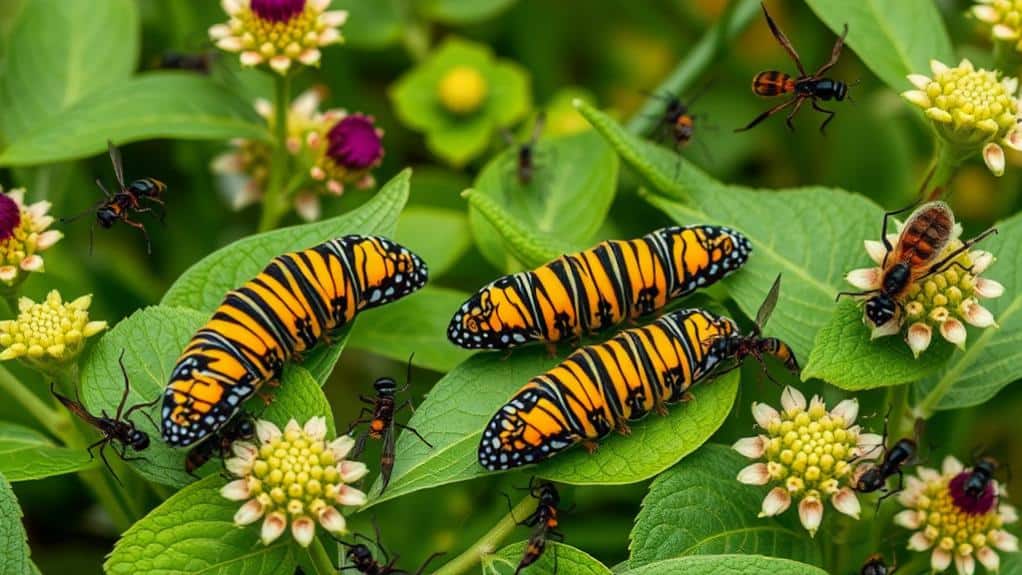
Wasps, especially paper wasps, are formidable predators of monarch caterpillars. They often target 5th instar caterpillars and transport smaller ones back to their nests.
It's not just wasps we need to worry about; ants are also significant predators. They can consume monarch eggs and carry newly hatched caterpillars away from milkweed plants.
Hedgehogs, though less common in gardens, also prey on vulnerable caterpillars and chrysalides. With such high predation rates, it's no wonder that over 95% of monarch larvae don't survive in the wild.
However, female monarchs compensate by laying over 500 eggs, knowing only a few will reach adulthood. Understanding these threats helps us better protect these beautiful butterflies in our gardens.
Wasp Control Methods
Given the significant threats posed by predators like wasps, it's crucial to implement effective control methods to protect monarch caterpillars.
Here are three effective strategies:
- Wasp traps: These can manage wasp populations effectively. EASYTRAP provides traps to schools for community use, making them a great option.
- Vespex bait: This bait works well for German and common wasps, but not for paper wasps. Observing wasps' flight direction helps locate nests for targeted removal.
- Nest elimination: Dousing nests with fly spray during the evening is safe and effective.
Additionally, structures like caterpillar castles and insect netting offer a protected environment for caterpillars.
Frequently Asked Questions
How Do You Protect Monarchs From Wasps?
To protect monarchs from wasps, I use predator awareness tactics like covering milkweed with netted tomato cages and planting strong-scented herbs. I also monitor regularly and plant nectar-rich flowers to distract and balance the ecosystem.
How to Keep Wasps Away From Butterfly Garden?
To keep wasps away from your butterfly garden, I use natural deterrents like lemongrass, lavender, and sage. These plants' strong scents repel wasps, creating a safer environment for butterflies while supporting beneficial pollinators.
How Do I Keep Wasps Away From My Milkweed?
To keep wasps away from my milkweed, I use protective covers and plant strong-scented herbs like lavender and thyme. I also regularly monitor for nests and plant nectar-rich flowers to divert wasps. Milkweed care's essential for monarchs!
Do Wasps Eat Monarch Butterflies?
Yes, wasps do eat monarch butterflies, particularly targeting their caterpillars. Observing predator dynamics, I've seen that increased wasp activity drastically reduces monarch survival rates. Understanding this helps us better manage garden ecosystems and protect these beautiful creatures.
Conclusion
By following these tips, we can create a safe haven for monarch butterflies in our gardens. Using protective covers, planting nectar-rich and deterrent plants, and keeping an eye on the caterpillars will make a huge difference. Remember, every little effort counts! Let's work together to protect these beautiful creatures so they can continue to grace our gardens with their incredible presence. Happy gardening, and let's make our spaces monarch-friendly!